

How to Choose Microwaveable Treats for Dogs
Last Updated: October 23, 2026
Quick Summary
Microwaveable treats for dogs are pre-formulated mixes that require water, mixing, and heating before serving, offering convenience and novelty compared to shelf-stable snacks. Choose treats with whole proteins as the first ingredient, avoid artificial additives and toxic ingredients like xylitol, and follow heating instructions carefully to prevent burns. Remember the 10% rule: treats should provide no more than 10% of your dog's daily calories.
- Treats should make up no more than 10% of your dog's daily calorie intake according to UC Davis School of Veterinary Medicine guidance.
- Always cool microwaveable treats completely before serving to prevent mouth burns from uneven microwave heating.
- Store prepared microwaveable treats in an airtight container in the refrigerator for up to 3 days.
- Look for whole proteins like chicken, beef, or fish as the first ingredient and avoid xylitol, onion, garlic, chocolate, grapes, and raisins.
- Microwaveable treats work best as occasional indulgences for special moments, training sessions, and celebrations rather than daily staples.
Table of Contents
- What Makes Microwaveable Treats Different
- Understanding Dog Treat Ingredients and What to Look For
- Matching Treats to Your Dog's Age, Size, and Breed
- Safe Treats for Dogs: Microwave Safety and Heating Instructions
- Dog Treat Serving Size and Portion Control
- Selecting Treats Based on Purpose and Texture
- Your Microwaveable Treat Selection Checklist
- Frequently Asked Questions
What Makes Microwaveable Treats Different
Microwaveable treats stand apart from standard dog snacks because they require preparation before serving.
The appeal is clear: convenience and novelty. You can prepare a fresh treat in minutes. Your dog gets something warm and engaging.
Pet parents are often drawn to microwaveable treats for dogs because they feel special, like making something homemade, but without the guesswork. The reality is somewhere in between.
The key difference: microwaveable treats are designed to transform during cooking. A dry mix becomes fluffy cake or a soft snack.
Understanding Dog Treat Ingredients and What to Look For
The ingredient list is your first clue to quality. Read it like you're shopping for yourself: short lists with recognizable items beat long lists with unfamiliar names.
Look for meat as the first ingredient. Chicken, beef, turkey, or fish should appear at the top. This tells you the treat is protein-forward.
Natural doesn't have a legal definition for pet treats, so don't rely on that word alone.
According to UC Davis School of Veterinary Medicine guidance on treat guidelines, treats and other additional food items should provide no more than 10% of your dog's daily calories.
Identifying Quality Ingredients in Microwaveable Options
Microwaveable treats often contain binding agents and moisture-retaining ingredients that shelf-stable treats don't. Look for these markers of quality:
- Whole proteins (chicken, beef, fish) rather than meat by-products or meat meal
- Minimal grain fillers, some grain is fine; excessive amounts suggest cheap filler
- No artificial colors or flavors, the treat should look and smell natural
- Recognizable binders like eggs, sweet potato, or oat flour instead of obscure gums or starches
You can explore best natural snacks for dogs: 10 healthy options to learn more about what makes ingredients genuinely healthy.
Microwaveable mixes often include ingredients like potato starch or tapioca to help them set after heating. This is normal and acceptable. What matters is whether the primary ingredients are whole foods.
Avoiding Harmful Additives and Preservatives
Some additives are genuinely risky for dogs. Others are safe but unnecessary. Know the difference.
Truly harmful:
- Xylitol (artificial sweetener, toxic to dogs)
- Onion or garlic powder (toxic)
- Raisins or grapes (toxic)
- Chocolate (toxic)
Safe but worth avoiding if you prefer natural:
- BHA, BHT, ethoxyquin (chemical preservatives)
- Artificial colors (Red 40, Yellow 5, etc.)
- Artificial flavors
- Corn syrup or excessive sugar
Safe and commonly used:
- Vitamin E (natural preservative)
- Rosemary extract (natural preservative)
- Salt (in small amounts)
- Gums like guar gum (thickener)
Read the label. If you don't recognize an ingredient, search it. Most pet supply retailers now carry treats without artificial additives, so you have options. You can learn more about what makes treats high-quality by reading why choose human grade dog treats.
Matching Treats to Your Dog's Age, Size, and Breed
Not every treat suits every dog. Age, size, and individual needs shape what's appropriate.
Puppies (under 1 year) need softer textures and smaller portions. Their teeth are still developing.
Adult dogs (1-7 years) have the most flexibility. They can handle varied textures and standard portion sizes. This is the sweet spot for experimenting with different treat formats.
Senior dogs (7+ years) often benefit from softer treats. Dental issues become common. Microwaveable treats are ideal for seniors because you can adjust consistency.
Size matters for portion control and choking risk. A treat appropriate for a 60-pound Labrador is too large for a 10-pound Chihuahua.
Breed-specific sensitivities exist. Some breeds are prone to allergies or digestive sensitivity.
Safe Treats for Dogs: Microwave Safety and Heating Instructions
Microwaveable treats require care during preparation. Temperature control is critical.
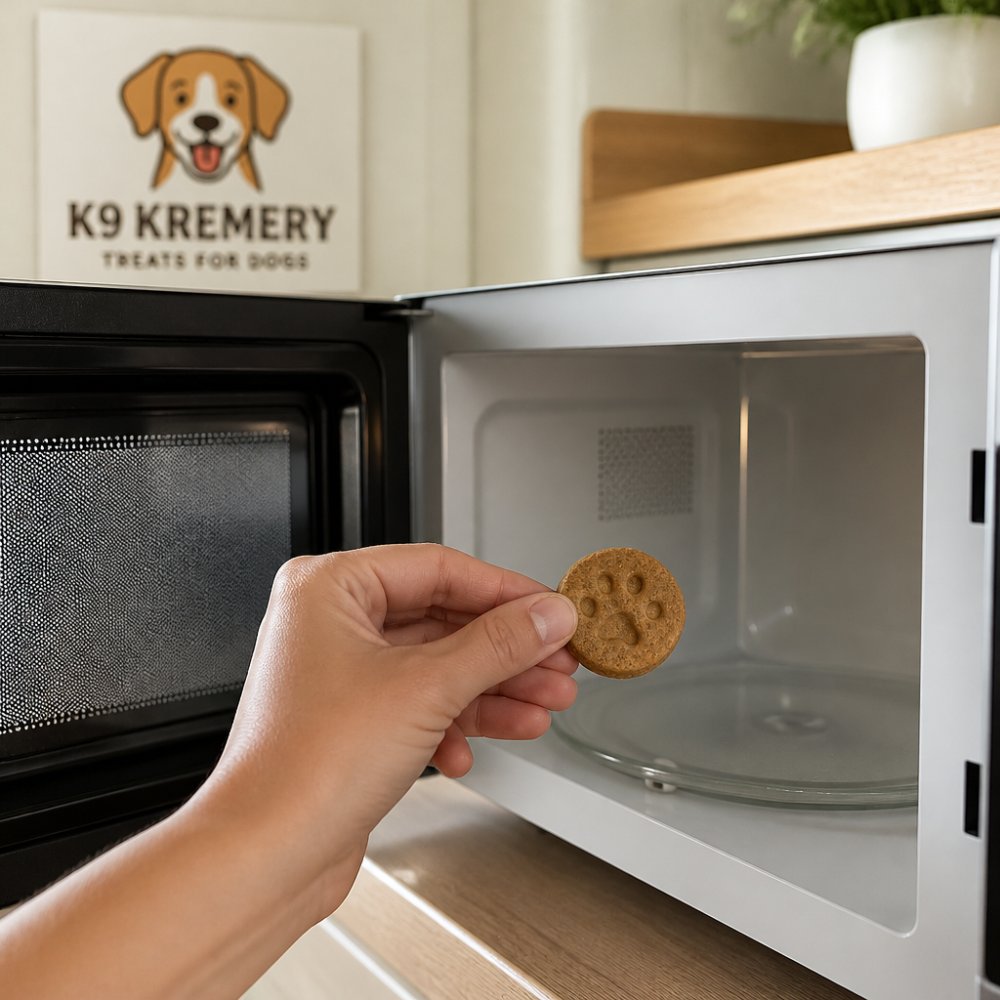
The basic process is simple: add water to the mix, stir, microwave, cool before serving. But the details matter.
Step 1: Follow package instructions exactly. Different mixes have different water ratios and cooking times.
Step 2: Use a microwave-safe container. Glass or ceramic work best.
Cuppy Cake - Microwave Cake in A Cup for Dogs - Peanut Butter Flavor →
Step 3: Microwave in short intervals. Start with the time listed on the package, but check at halfway.
Step 4: Let it cool completely before serving. This is non-negotiable.
Preventing Hot Spots and Burn Hazards
Microwave heating is uneven. A treat can have cold spots and dangerously hot spots in the same bite. USDA food safety guidance on microwave cooking notes that microwave cooking can leave cold spots; the same applies to hot spots.
To prevent this:
- Stir the mixture before and after microwaving
- Use the defrost setting if your microwave has one, it heats more gently
- Let the treat rest for 2-3 minutes after microwaving so heat distributes evenly
- Test the temperature yourself before giving it to your dog, touch it to your wrist like you would a baby's food
- If it's too hot for your wrist, it's too hot for your dog
Some pet parents microwave in very short bursts (20-30 seconds) and stir between each burst. This takes longer but creates more even heating.
Storage and Freshness After Heating
Microwaveable treats are perishable once prepared. They're not shelf-stable like a dry biscuit.
Store leftovers in an airtight container in the refrigerator for up to 3 days. Some mixes can be frozen for longer storage, check the package. Freeze in portions so you can thaw one serving at a time.
Before serving a stored treat, check for signs of spoilage: off smell, mold, or unusual texture. If anything seems off, discard it.
If your dog doesn't finish a treat within 30 minutes, remove it. Don't leave it sitting out. You can learn more about safe storage practices by reading are frozen dog treats safe daily? A complete guide.
Dog Treat Serving Size and Portion Control
Portion size is where many pet parents go wrong. A treat that looks small to you might be too large for your dog.
The 10% rule is your guide: treats should make up no more than 10% of your dog's daily calorie intake. The remaining 90% comes from their regular food. This keeps treats as supplemental, not a meal replacement.
Here's how to calculate:
- A 30-pound dog eating 800 calories per day can have 80 calories in treats
- A 60-pound dog eating 1,200 calories per day can have 120 calories in treats
- A 10-pound dog eating 300 calories per day can have 30 calories in treats
Most microwaveable treat packages list calories per serving. Use that number to portion correctly.
One microwaveable cake mix typically makes 2-4 servings depending on how you divide it. A single serving for a medium dog (30-50 pounds) is usually appropriate. Smaller dogs get a quarter or half serving. Larger dogs might get a full serving or slightly more.
Selecting Treats Based on Purpose and Texture
Different treat formats serve different purposes. Understanding this helps you choose the right one for the moment.
Training treats need to be small, soft, and quick to eat.
Chew treats are designed for extended chewing. These include dental chews and bully sticks. Microwaveable treats aren't chews, they're meant to be eaten quickly.
Celebration treats are special-occasion indulgences. Our Cuppy Cake Microwave Cake in A Cup for Dogs Birthday Cake Flavored with Pupfetti Sprinkles at $8.99 is designed for this purpose, a treat that feels like a real celebration.

Functional treats target specific needs: joint support, dental health, digestion.
Texture matters too. Soft treats suit dogs with dental issues or puppies. Firmer treats work for adult dogs with healthy teeth.
We also offer Cuppy Cake Microwave Cake in A Cup for Dogs Peanut Butter Flavor at $7.99 for dogs who prefer savory over sweet flavors.

Your Microwaveable Treat Selection Checklist
Use this checklist when evaluating a microwaveable treat:
- First ingredient is a whole protein (chicken, beef, fish, turkey)
- No xylitol, onion, garlic, chocolate, grapes, or raisins
- Minimal artificial colors, flavors, or chemical preservatives
- Package clearly lists ingredients and calorie content
- Portion size matches your dog's weight and calorie needs
- Texture is appropriate for your dog's age and dental health
- Instructions are clear about water ratio and cooking time
- Package recommends cooling before serving
- Storage instructions specify how long prepared treats last
- Price aligns with ingredient quality (better ingredients cost more)
- Your dog has no known allergies to listed ingredients
- Reviews mention dogs actually enjoy eating it
| Selection Criterion | What to Look For | Red Flag |
|---|---|---|
| Ingredients | Whole protein first | Grain or corn first |
| Safety | No toxic ingredients | Contains xylitol, onion, or chocolate |
| Portion Size | Matches your dog's weight | Too large for your dog |
| Texture | Soft for seniors, varied for adults | Hard or too dense |
| Storage | Clear refrigerator/freezer instructions | No storage guidance |
| Preparation | Simple water ratio and cook time | Vague or complicated instructions |
Choosing the right microwaveable treats for dogs means balancing convenience with quality. Start by reading the ingredient list, match the treat to your dog's age and size, follow heating instructions carefully, and stick to the 10% rule for portions. K9 Kremery's microwaveable treat options are formulated with natural ingredients, designed for pet parents who want to celebrate their dogs. Order online today and discover why so many dog owners trust us for special-occasion treats that dogs genuinely love.
Frequently Asked Questions
How much of a dog's daily calories should come from treats?
Treats and other additional food items should provide no more than 10% of a dog's daily calories; at least 90% should come from your dog's regular food. This guideline from UC Davis School of Veterinary Medicine helps ensure your dog receives balanced nutrition while still enjoying microwaveable treats as occasional rewards. Calculate your dog's caloric needs based on their weight and activity level, then allocate only a small portion of that daily total to treats.
Is microwaved food safe for dogs?
Microwaving dog treats can be safe when done correctly, but uneven heating is a real concern. Microwave cooking can leave cold spots and create hot spots that may burn your dog's mouth. Always stir microwaveable treats thoroughly after heating, let them cool completely, and test the temperature with your finger before serving. This prevents burns and ensures even heating throughout the treat.
What ingredients should I look for in microwaveable dog treats?
Look for high-quality, recognizable ingredients like real meat, whole grains, and natural fats. Avoid treats with artificial colors, flavors, or preservatives. Check the ingredient list carefully, ingredients are listed by weight, so meat should appear near the top. All-natural microwaveable treats, like those made with peanut butter, are excellent choices. Ensure the treat is appropriate for your dog's age and any dietary sensitivities.
How do I know if a microwaveable treat is safe for my dog?
Check the ingredient list for toxic substances like xylitol, which is dangerous for dogs. Verify the treat is labeled as safe for dogs and appropriate for your dog's age and size. Look for clear heating instructions and packaging that withstands microwave use. If your dog has allergies or sensitivities, review all ingredients carefully or consult your veterinarian before introducing a new treat.
