

How to Make Dog Birthday Cake: Step-by-Step
Table of Contents
- What You'll Need Before You Start
- Dog Cake Ingredients Safe for Dogs
- 3-Ingredient Dog Cake Recipe for Quick Celebrations
- Step-by-Step Instructions for Your Dog Birthday Cake
- Dog Cake Frosting and Topping Ideas
- How to Store Homemade Dog Cake
- Portion Sizes by Dog Weight and Serving Tips
- Common Mistakes to Avoid When Making Dog Cakes
- Frequently Asked Questions
Last Updated: October 11, 2026
What You'll Need Before You Start
Making a homemade dog birthday cake is simpler than you might think. Gather basic pantry items and standard baking equipment before you start mixing.

You'll need a mixing bowl, measuring cups and spoons, a whisk or fork, an 8-inch round baking pan, parchment paper, and a rubber spatula.
Basic ingredients include eggs, vegetable oil, flour, and applesauce or pumpkin puree. Optional items like peanut butter or banana add flavor.
Dog Cake Ingredients Safe for Dogs
Some common baking items are toxic to dogs. Stick to dog-safe ingredients when making your dog birthday cake.

Safe ingredients include:
- Eggs (cooked)
- Vegetable oil or coconut oil
- Applesauce (unsweetened)
- Pumpkin puree
- Peanut butter (xylitol-free)
- Banana (in moderation)
- Rolled oats or oat flour
- Whole wheat flour
- Carrots (cooked and diced)
- Blueberries (fresh, whole)
Ingredients to Avoid
Xylitol, an artificial sweetener in sugar-free products, causes severe liver damage in dogs. Always check labels carefully before using any sweetened items.
Chocolate, raisins, grapes, and macadamia nuts are toxic to dogs (People Foods to Avoid Feeding Your Pets). Salt and strong spices can upset your dog's stomach.
Avoid alcohol and caffeine. Some vanilla extracts contain alcohol, so use dog-safe vanilla or skip it.
3-Ingredient Dog Cake Recipe for Quick Celebrations
The simplest dog birthday cake requires just three items: egg, vegetable oil, and applesauce. The result is a moist, fluffy cake your dog will enjoy.
Mix one egg, one-third cup vegetable oil, and one cup of applesauce in a bowl. Stir until combined.
This recipe yields one 8-inch round cake. The applesauce keeps the cake moist without adding sugar.
Customize by swapping applesauce for pumpkin puree, adding mashed banana for sweetness, or mixing in a tablespoon of peanut butter.

Step-by-Step Instructions for Your Dog Birthday Cake
Mixing and Preparing the Batter
Crack one egg into a clean bowl and beat until combined. Add one-third cup vegetable oil and stir well.
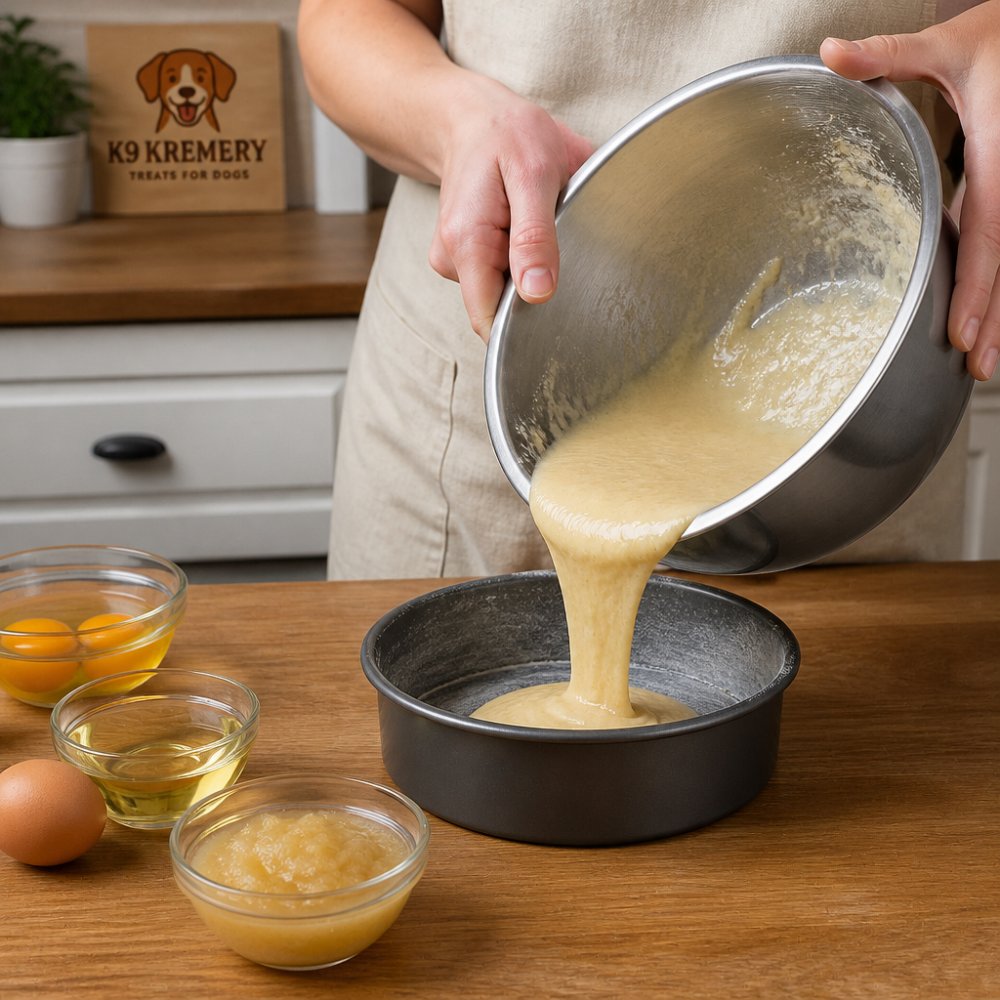
Pour in one cup applesauce and mix until smooth. This wet base keeps your dog birthday cake moist.
In a separate bowl, combine one and one-half cups whole wheat flour (or all-purpose flour). Whole wheat adds fiber dogs benefit from.
Add flour slowly, stirring to avoid lumps. Stop mixing once incorporated, overmixing creates a dense cake.
Baking Temperature and Cooking Time
Preheat your oven to 350°F. Bake your dog birthday cake for 25-30 minutes.
Start checking at 25 minutes by inserting a toothpick into the center, as oven temperatures vary.
How to Tell When the Cake Is Done
Insert a toothpick or knife into the center of the cake. If it comes out clean or with just a few moist crumbs, the cake is done. If wet batter clings to the toothpick, bake for another 2-3 minutes and check again.
The cake should be golden brown on top and spring back when you lightly touch it. The edges should pull slightly away from the pan sides.
Cooling and Removing the Cake from the Pan
Cool the cake in the pan for 10 minutes, then run a knife around the edges to loosen it.
Place a plate over the pan and flip upside down. If it sticks, cool a few more minutes and try again.
Once completely cool, frost, slice, or serve plain. Never serve warm cake, it can burn your dog's mouth.
Dog Cake Frosting and Topping Ideas
Dog-safe frosting adds visual appeal while keeping the treat healthy. Choose based on your dog's digestive tolerance and dietary needs.
Peanut Butter Frosting
Mix one-half cup xylitol-free peanut butter with two tablespoons water for frosting. Check the label three times, xylitol is extremely toxic to dogs. Use sparingly for dogs with pancreatitis history or weight concerns, as peanut butter is calorie-dense (about 95 calories per tablespoon).
Yogurt Frosting
Use full-fat plain yogurt for richness and digestibility. Skip if your dog is lactose intolerant or has dairy sensitivity. Introduce in small amounts and monitor for loose stools or vomiting over 24 hours.
Cream Cheese Frosting
Use a small amount of plain cream cheese mixed with water. Keep it minimal and reserve for dogs with no history of digestive upset or dairy sensitivity.
Coconut Oil Frosting (Dairy-Free Alternative)
For dairy intolerance, whip one-quarter cup solid coconut oil with one tablespoon unsweetened applesauce. Start with a small amount to assess tolerance.
Topping Ideas
Toppings add visual appeal without the digestive load of frosting:
- Crushed blueberries (antioxidant-rich and low-calorie)
- Diced carrots (cooked and cooled for easier digestion)
- A sprinkle of rolled oats (adds fiber)
- Plain dog biscuits, crushed (familiar and safe)
- Sliced banana (natural sweetness, but high in sugar, use sparingly)
- Shredded apple (unsweetened, remove seeds first)
How to Store Homemade Dog Cake
Store your dog birthday cake in an airtight container at room temperature for up to two days, away from direct sunlight.
Refrigerate in a sealed container for up to five days. Let it come to room temperature before serving.
Freeze wrapped tightly in plastic wrap and a freezer bag for up to three months. Thaw in the refrigerator overnight before serving.
Never leave cake at room temperature for more than four hours, as bacteria grows quickly in warm environments.
Portion Sizes by Dog Weight and Serving Tips
Cake should be a special treat fed in moderation. The right portion depends on your dog's size.
Dog Birthday Cake Kit - Birthday Cake Flavor with Pupfetti Sprinkles →
| Dog Weight | Recommended Serving | Frequency |
|---|---|---|
| Under 10 lbs | 1-2 tablespoons | Once monthly |
| 10-25 lbs | 2-4 tablespoons | Once monthly |
| 25-50 lbs | One-quarter to one-third cup | Once monthly |
| Over 50 lbs | One-third to one-half cup | Once monthly |
Reduce portions if your dog has eaten other treats that day.
Serve at room temperature for best digestion. Cut into appropriate sizes to prevent choking.
Watch for digestive upset after first serving. If vomiting or diarrhea occurs, reduce portion size or skip cake.
Common Mistakes to Avoid When Making Dog Cakes
Understanding what causes baking failures helps you troubleshoot and improve. Many problems can be fixed mid-recipe or prevented in your next attempt.
Overmixing Batter
Problem: Dense, tough cake instead of light and fluffy.
Why it happens: Overmixing develops gluten, creating a tight crumb structure that ruins cake texture.
How to fix it: Mix just until flour disappears, about 10-15 seconds. Small lumps are fine. If overmixed, serve smaller portions as the denser texture may sit heavier in your dog's stomach.
Prevention: Use a spatula instead of a whisk for the final flour incorporation. Fold gently rather than stir vigorously.
Incorrect Oven Temperature
Problem: Cake burns on the outside while staying raw inside, or spreads flat and stays gummy.
Why it happens: Most home ovens run 25-50°F hotter or cooler than the dial indicates. An oven thermometer is the best investment for baking success.
How to fix it: Use an oven thermometer on the center rack. Adjust temperature by 25°F if needed and check for doneness at 20 minutes.
Prevention: Rotate halfway through baking and avoid opening the door in the first 20 minutes.
Dry or Crumbly Cake
Problem: Cake crumbles when you slice it or feels sandy in texture.
Why it happens: Too much flour, insufficient wet ingredients, or overbaking. Whole wheat flour absorbs more moisture than all-purpose flour.
How to fix it: Serve with frosting or topping to add moisture. For future batches, reduce flour by 2 tablespoons or add 2 tablespoons more applesauce.
Prevention: Spoon flour into the measuring cup and level with a knife, scooping compacts flour and adds 15-20% more than intended.
Dense or Sunken Cake
Problem: Cake doesn't rise, or it rises then collapses in the center.
Why it happens: Underbaking, old eggs, or too much applesauce. Eggs trap air when beaten; old eggs (more than 2 weeks) don't incorporate air effectively.
How to fix it: If the center sinks but edges are done, bake 3-5 more minutes. For future batches, beat the egg for 30 seconds before adding oil.
Prevention: Use eggs within 2 weeks of purchase. Beat the egg thoroughly, it should look slightly frothy.
Ingredient Substitutions Gone Wrong
Problem: Cake texture or flavor changes unexpectedly after swapping ingredients.
Why it happens: Ingredients have different moisture content, density, and binding properties. One-to-one swaps don't always work.
Common substitutions and adjustments:
- Oat flour for wheat flour: Oat flour absorbs less water. Reduce oat flour by 2 tablespoons per cup and add 2 tablespoons applesauce.
- Pumpkin puree for applesauce: Pumpkin is thicker. Use 3/4 cup pumpkin for every 1 cup applesauce called for.
- Banana for applesauce: Banana is denser and sweeter. Use 2/3 cup mashed banana for every 1 cup applesauce, and reduce oil by 2 tablespoons.
- Coconut oil for vegetable oil: Coconut oil solidifies when cool. Use the same amount but ensure it's melted and cooled slightly before mixing.
Prevention: Make one substitution at a time. Keep notes on what you changed and how it affected the result. This builds your troubleshooting knowledge for future bakes.
Forgetting to Check Ingredient Labels
Problem: Hidden xylitol, added sugars, or other toxic ingredients end up in the cake.
Why it happens: Many "natural" or "sugar-free" products contain xylitol as a sweetener. Applesauce, peanut butter, and even some whole wheat flours can have additives.
How to prevent it: Read every ingredient label three times, once when you buy it, once when you gather ingredients, and once more before mixing. Search the label specifically for xylitol, sorbitol, and other sugar alcohols. Call the manufacturer if the label is unclear.
Serving Cake While Warm
Problem: Burned mouth, digestive upset, or vomiting.
Why it happens: Warm cake can burn sensitive mouth tissue. Warm food also speeds up digestion, which can cause stomach upset in dogs not accustomed to it.
How to fix it: Always cool the cake completely, at least 2 hours at room temperature, or 30 minutes in the refrigerator. Test the temperature on your own wrist before serving.
Prevention: Bake the cake the day before the celebration so you're never tempted to serve it warm.
Frequently Asked Questions
What kind of birthday cake is safe for dogs?
A safe dog birthday cake uses dog-friendly ingredients like peanut butter, pumpkin, applesauce, bananas, carrots, rolled oats, eggs, and vegetable oil. Avoid xylitol, chocolate, grapes, raisins, and onions, which are toxic to dogs. The Dog Birthday Cake Kit options from K9 Kremery come pre-formulated to be safe and include icing, making it easy to create a healthy celebration treat your pup will love.
What ingredients should you avoid in a dog birthday cake?
Never use xylitol (an artificial sweetener that is extremely toxic to dogs), chocolate, macadamia nuts, grapes, raisins, onions, garlic, or avocado. These ingredients can cause serious health problems. Also avoid excessive salt, sugar, and dairy if your dog has a sensitive stomach. Stick to simple, whole-food ingredients like pumpkin, carrots, applesauce, and peanut butter to keep your homemade dog cake safe.
How much dog cake should you serve?
Portion size depends on your dog's weight. Small dogs (under 10 pounds) should have 1-2 ounces per serving, medium dogs (10-50 pounds) can have 2-4 ounces, and large dogs (over 50 pounds) can have 4-6 ounces. Treats, including birthday cake, should make up no more than 10% of your dog's daily calorie intake. Feed in moderation as part of a balanced diet, especially if your dog has dietary sensitivities.
Can I use a dog birthday cake kit instead of making one from scratch?
Yes, dog birthday cake kits are a convenient option. K9 Kremery offers ready-made kits like the Dog Birthday Cake Kit in Birthday Cake, Peanut Butter, and Pumpkin flavors, all priced affordably and designed to be mixed with just an egg, oil, and water. These kits come complete with icing, so you can have a finished cake in minutes. They're formulated to be healthy and safe, making them perfect for pet parents who want a celebration treat without the guesswork.