

Pumpkin Dog Treats: Recipes, Safety, and Store Picks
Quick Summary
Pumpkin dog treats are a simple, low-calorie snack made from plain canned pumpkin, an egg, and oat flour, baked for 20 to 25 minutes at 350°F. Keep treats to about 10 percent of a dog's daily calories, and never use pumpkin pie filling or any ingredient toxic to dogs.
- Use plain canned pumpkin puree, not pumpkin pie filling, which often contains sugar and spices.
- Bake the 1-inch treats at 350°F for 20 to 25 minutes, flipping them halfway through.
- Treats should make up no more than about 10 percent of a dog's daily calories.
- Keep xylitol, onions, garlic, grapes, raisins, macadamia nuts, and chocolate out of treats entirely.
- Store homemade treats in the fridge for up to one week or freeze them for up to two months.
Table of Contents
- Why Pumpkin Works as a Dog Treat
- 3 Ingredient Pumpkin Dog Treats You Can Make Tonight
- Homemade Pumpkin Dog Treats Recipes Vet Approved Guidelines
- Pumpkin and Peanut Butter Dog Treats: Safe Combinations
- Frozen Pumpkin Dog Treats for Warm Days
- Ready-Made Pumpkin Dog Treats: Our Top Picks from K9 Kremery
- Choosing Your Next Pumpkin Treat at K9 Kremery
- Frequently Asked Questions
Why Pumpkin Works as a Dog Treat
Last Updated: November 22, 2026
Pumpkin dog treats are one of the simplest ways to give your dog something special without reaching for a sugary store biscuit. Pumpkin is naturally low in calories and rich in fiber, which is why it has long been recommended as a gentle addition to a dog's snacks. Still, not every claim online holds up, so it helps to know what pumpkin does well and where its limits are.
According to Petfood Industry's 2026 pet treats market report, the U.S. pet treats market reached $13.5 billion in 2026. Demand for treats that feel wholesome and natural keeps growing, and pumpkin sits at the center of that trend.
Fiber matters most. A prospective multicenter study found that a fiber-supplemented therapeutic food rapidly improved stool consistency in dogs with chronic large-bowel diarrhea (the PubMed Central study by D. A. Fritsch and colleagues). That result does not prove a pumpkin treat will do the same, but it explains why fiber-rich ingredients get attention from owners.
Keep the expectations realistic. Pumpkin should not be treated as a cure-all for digestive problems. As Dr. Andy Roark's article on pumpkin's reputation points out, the internet has oversold its benefits. Pumpkin treats work best as an occasional snack, not a replacement for a complete diet. As Nutro notes, treats of any kind should stay occasional and should not interfere with a dog's primary food.
3 Ingredient Pumpkin Dog Treats You Can Make Tonight
A three-ingredient pumpkin treat is the fastest place to start, and the version below is built to be forgiving: one wet ingredient, one binder, one flour. It makes roughly 30 small treats, depending on the size of your cutter.
What you need
- 1 cup plain canned pumpkin puree (not pumpkin pie filling)
- 1 large egg
- 2 to 2 1/2 cups oat flour, plus extra for dusting
Step by step
- Heat the oven to 350°F and line a baking sheet with parchment paper.
- Whisk the pumpkin and egg together in a large bowl until smooth.
- Add 2 cups of oat flour and stir until a soft dough forms. If the dough still clings to your fingers, work in the remaining 1/2 cup a spoonful at a time.
- Turn the dough onto a lightly floured surface and roll it to about 1/4 inch thick. Thinner dough bakes into crisper treats; thicker dough stays chewier.
- Cut into small shapes with a cookie cutter or a knife. A 1-inch cutter keeps treats reward-sized for most dogs.
- Bake for 20 to 25 minutes, until the edges are dry and the centers feel firm to the touch. Flip the treats halfway through so they dry evenly.
- Cool completely on a wire rack before serving. Treats crisp up further as they cool.
Texture fixes
Watch out: if the dough crumbles when you press it, add water one teaspoon at a time; if it sticks to the rolling pin, dust with oat flour rather than adding more liquid, which makes the treats dense.
Portions
Keep the portions small. Treats should stay a fraction of your dog's daily calories, so cut them to a size you can count as a reward. For a 20-pound dog, one or two 1-inch treats per session is a reasonable starting point; scale up or down with body size and check with your veterinarian if your dog has a medical condition.
Storage
Store cooled treats in an airtight container in the refrigerator for up to one week, or freeze them in a single layer and then bag them for up to two months. Discard any treat that smells sour or shows mold.
The basic recipe comes down to a few ingredients, a short bake, and a few fixes if the dough misbehaves.
| Step | What to do | Time |
|---|---|---|
| Prep | Heat oven to 350°F and line a sheet | Before mixing |
| Mix dough | Whisk pumpkin and egg, add flour | Until soft dough forms |
| Roll and cut | Roll to 1/4 inch, cut 1-inch shapes | Thinner dough = crisper |
| Bake | Flip halfway through | 20 to 25 minutes |
| Cool | Cool fully on a wire rack | Until completely cool |
| Store | Airtight container in the fridge | Up to one week |
Homemade Pumpkin Dog Treats Recipes Vet Approved Guidelines
Veterinary guidance comes down to three rules: use plain pumpkin, avoid ingredients toxic to dogs, and control portions. The details below turn those rules into something you can actually follow at the counter.
Start with the right pumpkin
Canned pumpkin puree is safer than pumpkin pie filling, which often contains sugar and spices. Check the label for a single ingredient: pumpkin. If you are using fresh pumpkin, peel it, remove the seeds and stringy pulp, and cook it until soft before pureeing.
Ingredients to keep out of the bowl
Skip xylitol, onions, garlic, grapes, raisins, macadamia nuts, and chocolate entirely. Xylitol in particular is dangerous even in small amounts, and it hides in some peanut butters and sugar-free syrups, so read every label before it goes in. Nutmeg and large amounts of cinnamon are best left out of dog treats as well.
Serving sizes by dog size
Treats should make up no more than about 10 percent of a dog's daily calories, a guideline most veterinarians use. As a practical starting point for a pumpkin treat of roughly 20 to 30 calories:
- Small dogs (under 20 pounds): 1 to 2 small treats per day
- Medium dogs (20 to 50 pounds): 2 to 3 treats per day
- Large dogs (over 50 pounds): 3 to 4 treats per day
These are starting points, not prescriptions. Adjust for your dog's weight, activity level, and any condition your veterinarian is managing, and ask your vet before adding treats if your dog is on a therapeutic diet.
Storage and spoilage
Store homemade treats in the refrigerator for up to one week, or freeze them for up to two months. Refrigerate anything made with egg, yogurt, or meat within two hours of baking. Signs of spoilage include a sour or off smell, visible mold, sliminess, and a change in color; when in doubt, throw it out rather than risk a stomach upset.
Troubleshooting common failures
- Crumbly dough that will not hold shape: add water one teaspoon at a time, or add one more egg yolk for binding.
- Sticky dough that spreads: chill it for 20 to 30 minutes before rolling, and dust with flour rather than adding more liquid.
- Uneven baking: roll the dough to a consistent thickness and rotate the sheet halfway through the bake.
- Treats that turn out too hard: pull them from the oven a few minutes earlier and store them in a sealed bag with a slice of bread to soften slightly.
- Treats that turn out too soft: return them to a 300°F oven for 10 to 15 minutes to dry out.
Substitutions and dietary needs
Oat flour can usually stand in for wheat flour cup for cup, and a grain-free blend works in the same ratio, though texture and baking time may shift, so check the treats a few minutes early the first time. For dogs with chicken or egg allergies, a flax egg (one tablespoon ground flaxseed mixed with three tablespoons water) can replace the egg, but the dough will be more fragile. Substitutions change texture and baking time, so test a small batch before making a full one.
Pumpkin and Peanut Butter Dog Treats: Safe Combinations
Peanut butter pairs well with pumpkin, but read the label. Choose a brand with no added xylitol and no added salt or sugar. Oat flour and rolled oats add texture and keep the dough from getting sticky.
Frozen Pumpkin Dog Treats for Warm Days
Frozen treats work well in summer. Blend pumpkin with plain yogurt, pour into silicone ice cube trays, and freeze until solid. Keep portions small and remove them from the freezer a few minutes before serving to avoid a painful tooth crack.
Ready-Made Pumpkin Dog Treats: Our Top Picks from K9 Kremery
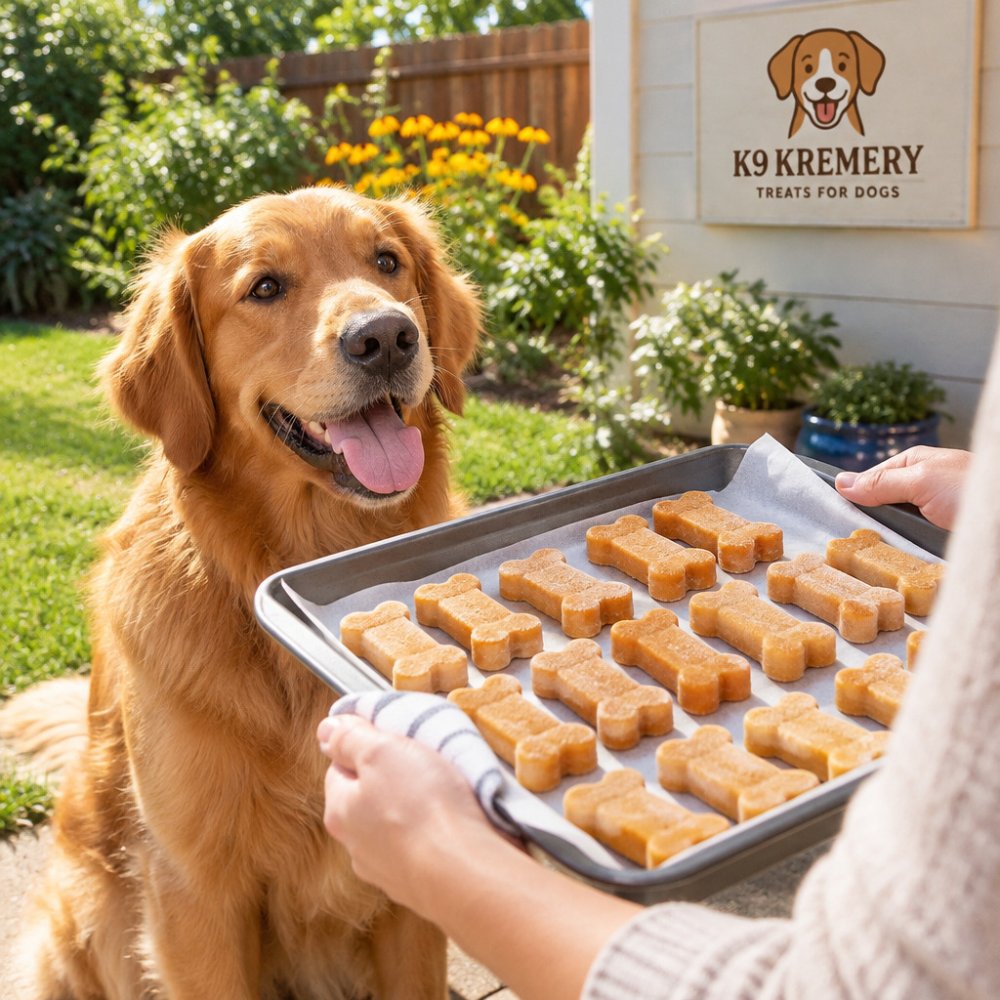
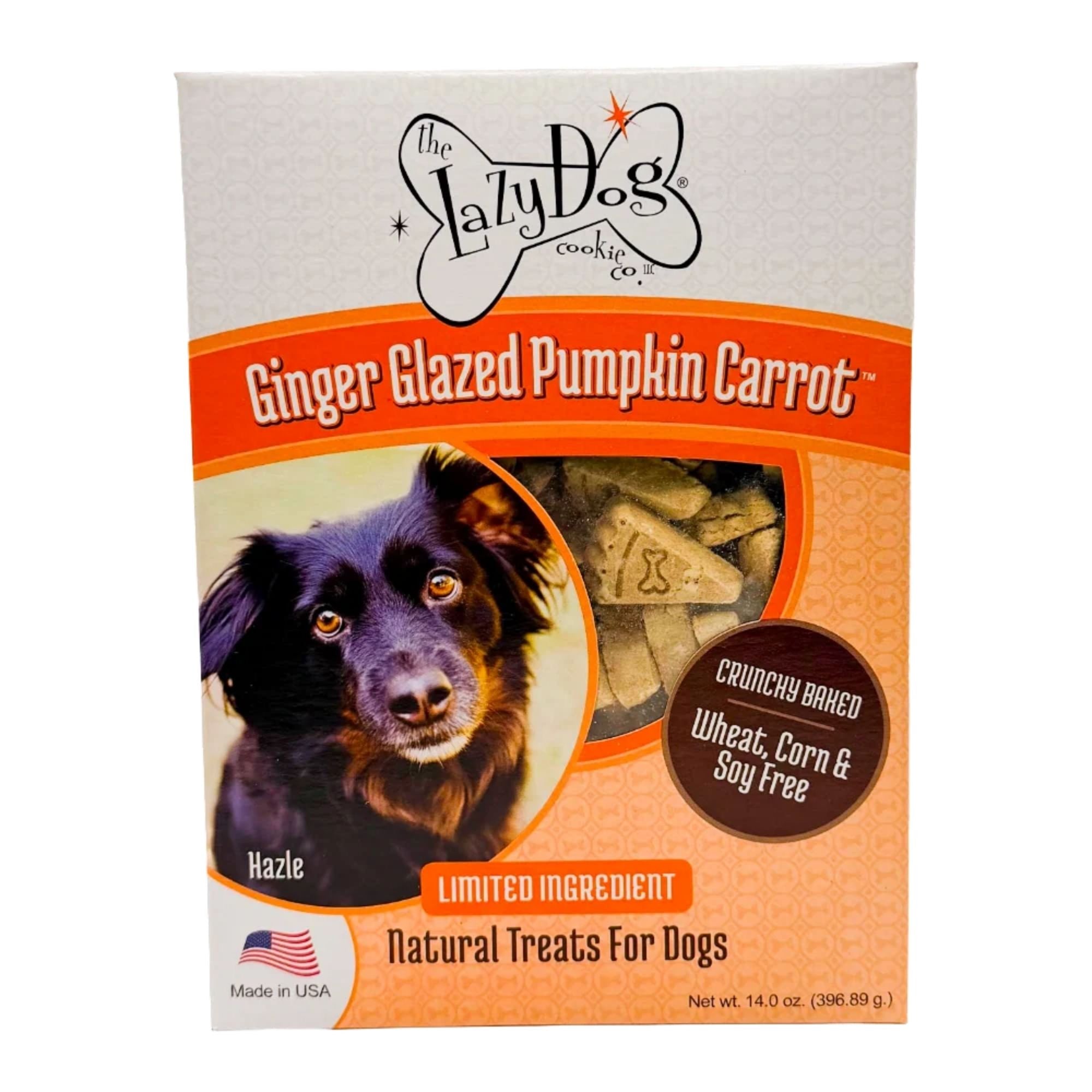
Baking is not for everyone, so ready-made options matter. The Wagmore Dog Grain Free Baked Pumpkin 14oz. at $6.99 suits owners looking for a grain-free crunchy biscuit. The Lazy Dog Ginger Glazed Pumpkin Carrot 14oz. at $7.99 is a soft option built on limited ingredients.
Choosing Your Next Pumpkin Treat at K9 Kremery
Pick a treat that matches how you plan to use it. For baking at home, the Puppy Cake Mix - Pumpkin (wheat-free) at $7.49 needs just one egg, oil, and water. For a crunchy everyday biscuit, compare the Wagmore and Merrick options. Check ingredient lists, keep portions small, and browse our full collection to find the right fit for your dog.

Frequently Asked Questions
Are pumpkin dog treats good for dogs?
Plain pumpkin is a source of fiber. Choose products or recipes with few ingredients, skip added sugar, salt and xylitol, and check with your veterinarian first if your dog has a health condition, is on a prescription diet, or has had pancreatitis.
How do you make 3 ingredient pumpkin dog treats?
Mix one cup of plain canned pumpkin, one cup of oat flour and one egg until a stiff dough forms. Roll it to about a quarter inch thick, cut into small shapes and bake at 350 degrees Fahrenheit for 15 to 20 minutes, then cool completely. Store in an airtight container in the refrigerator for up to one week, or freeze for longer storage.
Can dogs eat pumpkin every day?
Many dogs can eat small amounts of plain pumpkin daily, but it should stay a small part of their total calories. Pumpkin is low in calories, yet too much can loosen stool. Count treats toward your dog's daily intake and watch for changes in stool. Ask your veterinarian before making pumpkin a daily habit, particularly for puppies or dogs with sensitive stomachs.
Can you use canned pumpkin in dog treats?
Yes, as long as the can contains only pure pumpkin puree and not pumpkin pie filling, which often includes sugar and spices that can upset a dog's stomach. Check the label for added ingredients before you start. Canned pumpkin is one of the most reliable bases for homemade pumpkin dog treats because its moisture level is consistent from batch to batch.
