

Are Crunchy Dog Biscuits Good for Everyday Rewards?
Quick Summary
Crunchy dog biscuits can work well for everyday rewards because they are shelf-stable, easy to portion, and hold up in a treat pouch. Keep treats to no more than 10% of your dog's daily calories, and choose a size that fits your dog's mouth.
- Crunchy treats account for 77% of all treats given to dogs, according to a 2024 review.
- Treats should make up no more than 10% of a dog's daily calorie intake.
- Work out a daily biscuit count by dividing the treat budget by calories per biscuit.
- Match biscuit size to your dog's muzzle width and watch how it chews the first one.
- Crunchy biscuits are a treat, not a dental product, and do not replace brushing or vet checks.
Table of Contents
- What Crunchy Dog Biscuits Are and Why Owners Reach for Them
- Crunchy Versus Soft Treats for Dogs
- Reading Crunchy Dog Biscuits Ingredients Labels
- How Much Dog Treat Portion Size Is Right for Your Dog
- Choosing Biscuit Size and Texture by Dog Size, Age, and Chewing Ability
- Building a Simple Everyday Reward Routine
- Picking Your First Crunchy Biscuit for Daily Rewards
- Frequently Asked Questions
What Crunchy Dog Biscuits Are and Why Owners Reach for Them
Crunchy dog biscuits are the baked, dry treats most owners picture when they think of dog snacks. A 2024 review in Frontiers in Animal Science The science of snacks: a review of dog treats reports that crunchy treats account for 77% of all treats given to dogs. That makes them the default choice in most households.
Owners reach for them for a few practical reasons. They are shelf-stable, easy to portion, and simple to hand out during training. They also carry a sense of routine: a biscuit becomes a predictable reward that a dog learns to expect.
The category is also growing. The U.S. pet treats market was valued at $16,074.9 million in 2026 and is projected to reach $23,547.6 million by 2031 MarketsandMarkets pet treats market forecast. Estimates from other analysts differ, so treat any single market figure as a rough guide rather than a fixed number.
Crunchy Versus Soft Treats for Dogs
Crunchy and soft treats do different jobs. Crunchy biscuits hold up well in a treat pouch, last for weeks, and give a dog something to chew. Soft treats are easier to bite in half, which helps when you are rewarding a dog many times in a short session.
Many owners use both. A crunchy biscuit works well for a daily reward at home, while a softer option can suit fast, repeated rewards during training. If your dog is a fast or enthusiastic eater, a soft treat may be easier to break into small pieces.
Our shop offers a range of options, and the crunchy dog treats for everyday rewards guide is a useful next step if you are weighing textures.
Reading Crunchy Dog Biscuits Ingredients Labels
The ingredient list tells you more than the front of the bag. Look for a named protein source such as chicken or a named grain, and be cautious when the first item is a generic filler.
Check for these details on every label:
- A named protein or vegetable source near the top of the list
- Clear preservative information, including whether any preservatives are artificial
- The product's feeding guidelines and calorie information
- Whether the product is made for a specific life stage, such as puppy or adult
Human-grade labeling is one way some brands describe their standards. If that matters to you, read why human grade dog treats are labeled that way before you buy.
Labels are not a substitute for a veterinarian's advice. If your dog has a known allergy or a medical condition, check with your vet before adding any new biscuit.
How Much Dog Treat Portion Size Is Right for Your Dog
Treats add calories, and those calories count toward your dog's total daily intake. PEDIGREE advises that treats make up no more than 10% of a dog's daily calorie intake and says to follow the product's package feeding guidelines PEDIGREE crunchy dog treats guidance. The guideline is simple; the arithmetic is where most owners go wrong, so work it through once and write the number on the bag.
Here is a worked example. Suppose your veterinarian or the food label gives a daily target of 600 calories for your dog, and the food provides 500 of those calories across meals. The treat budget is the smaller of two numbers: 10% of the daily target (60 calories) or the calories left after meals (100 calories). In this case the treat budget is 60 calories. If each biscuit is 30 calories, that is two biscuits a day, split into smaller pieces if you are rewarding frequently.
A second example shows why the biscuit's calorie density matters. A 400-calorie daily target leaves a 40-calorie treat budget. A 20-calorie biscuit fits twice; a 40-calorie biscuit fits once. The same weight of two different biscuits can differ by a factor of two or more in calories, so read the kilocalorie figure printed per treat or per cup on each bag rather than assuming.
Use this sequence each time you open a new bag:
- Write down your dog's daily calorie target from your vet or the food label.
- Subtract the calories your dog gets from meals.
- Cap treats at 10% of the daily target, or the remainder after meals, whichever is lower.
- Divide that budget by the calories per biscuit to get a daily biscuit count.
- Break biscuits into pieces for training so the count stretches across the day.
Portion size changes with your dog's size and activity level. A small dog may need only a few biscuits a day, while a large, active dog can take more. Adjust rewards if your dog gains weight, and recheck the budget whenever you change food, because a new food with different calories per cup shifts the remainder.
Watch out: the 10% figure is a ceiling, not a target, and it assumes the rest of the diet is complete and balanced. If treats crowd out meals or your dog is on a prescription diet, set the budget with your veterinarian instead of doing the math yourself.
Choosing Biscuit Size and Texture by Dog Size, Age, and Chewing Ability
Size and texture matter as much as flavor. A biscuit that is too large can frustrate a small dog, while a tiny one can be swallowed whole by a large dog. Match the piece to your dog's mouth, and use the three checks below in order.
Check one: mouth fit. The biscuit should be wide enough that your dog has to work at it but not so wide that it cannot fit between the back teeth. A common pattern is to compare the biscuit to the width of your dog's muzzle. If your dog drops the biscuit and walks away, it is probably too large; if it disappears in one motion, it is probably too small.
Check two: chew effort. Watch the first biscuit. A dog that crunches steadily and swallows is handling the texture. A dog that gulps, coughs, or swallows whole is telling you the piece is too small or the texture too brittle. Firm, baked biscuits suit strong jaws; thinner or softer biscuits suit dogs that chew cautiously.
Check three: life stage. Puppies need textures they can chew without strain while their teeth come in, and smaller pieces reduce the risk of gulping. Senior dogs may prefer a softer or smaller biscuit if chewing is harder for them, and a dog with missing or worn teeth often does better with a biscuit that breaks easily. Adult dogs with strong jaws usually handle firmer biscuits well.
Put the three checks into a simple selection routine:
- Pick a biscuit size close to your dog's muzzle width.
- Offer one and watch the first ten seconds of chewing.
- Adjust up or down one size based on whether the dog struggled or swallowed whole.
- Recheck the size when your dog's teeth or appetite change, such as during teething or after a dental procedure.
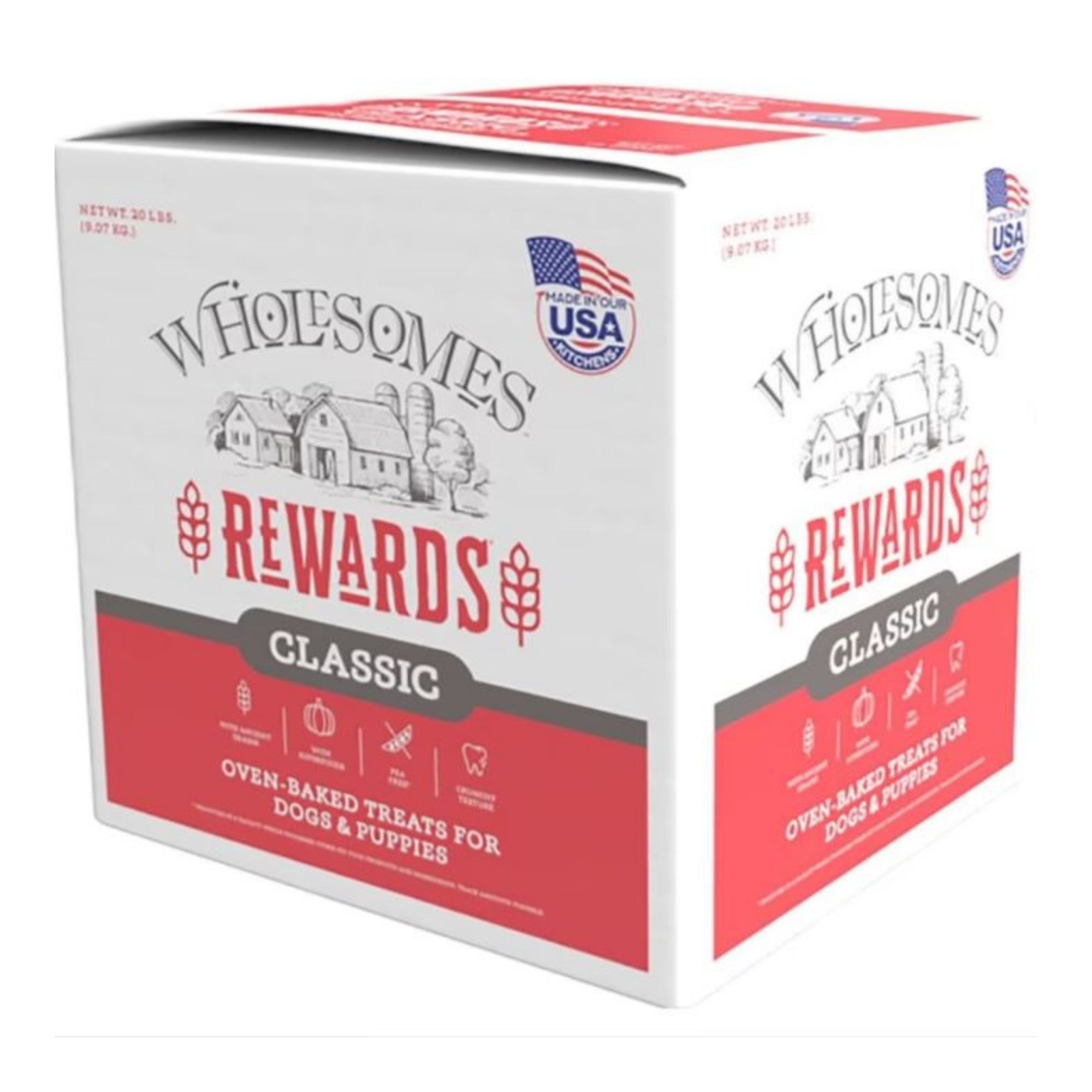
Our Wholesomes Rewards Classic Variety Biscuits Chicken Medium 20 Lb suits medium-sized adult dogs, and the Wholesomes Rewards Classic Variety Biscuits Chicken Puppy 20 Lb is sized for younger dogs with developing teeth.
Watch out: a crunchy biscuit is a treat, not a dental product. Biscuits are a treat, not a dental product, and are not a substitute for brushing or a veterinary dental check. If your dog has a history of dental disease or a fragile jaw, ask your vet which texture is safe before buying a large bag.
The three checks below help you match a biscuit to your dog's mouth, chewing style, and life stage.
| Check | What to look for | Adjust if |
|---|---|---|
| Mouth fit | Width close to your dog's muzzle | Dog drops it, or it disappears in one motion |
| Chew effort | Steady crunching and swallowing | Dog gulps, coughs, or swallows whole |
| Life stage | Texture suited to puppy, adult, or senior teeth | Chewing is harder, or teeth are missing or worn |
Building a Simple Everyday Reward Routine
A reward routine works best when it is consistent. Decide how many biscuits your dog gets each day, and split them across the day rather than handing out a large batch at once.
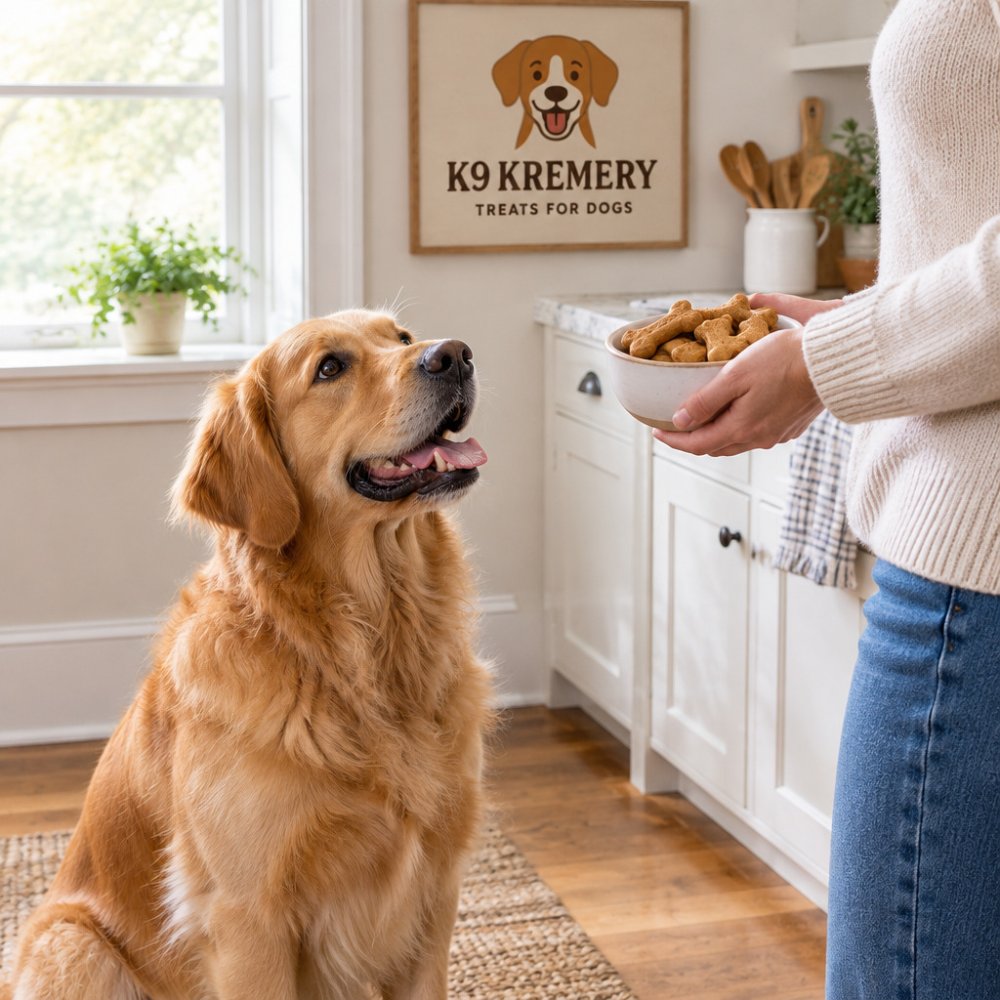
Here is a simple routine to start with:
- Set your daily treat allowance using the portion guidance above.
- Divide the allowance into small rewards for training and one or two for everyday good behavior.
- Use the same cue each time so your dog connects the biscuit with the behavior.
- Store the rest of the bag in a cool, dry place, sealed to keep it fresh.
!A golden retriever sitting attentively in a bright kitchen while its owner holds a small bowl of bone-shaped crunchy biscuits, soft morning light
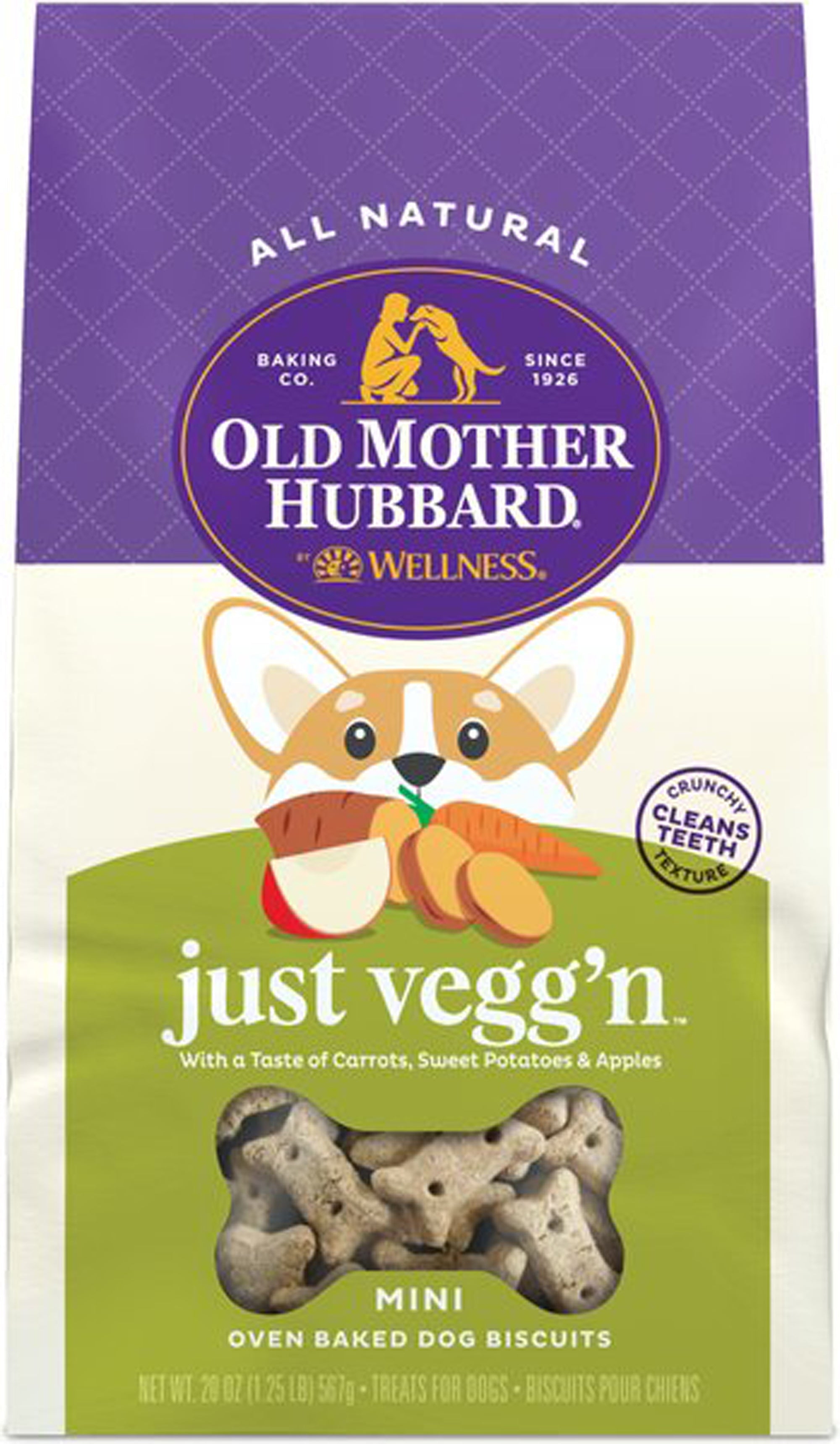
Our Omh Mini Just Vegg'N 20oz. Crunchy Classic Snacks are paw-fect as training rewards and sold at $39.99.
Picking Your First Crunchy Biscuit for Daily Rewards
Start with a biscuit that suits your dog's size, age, and chewing habits. Check the ingredient list, confirm the calorie count, and plan your daily portion before you open the bag.
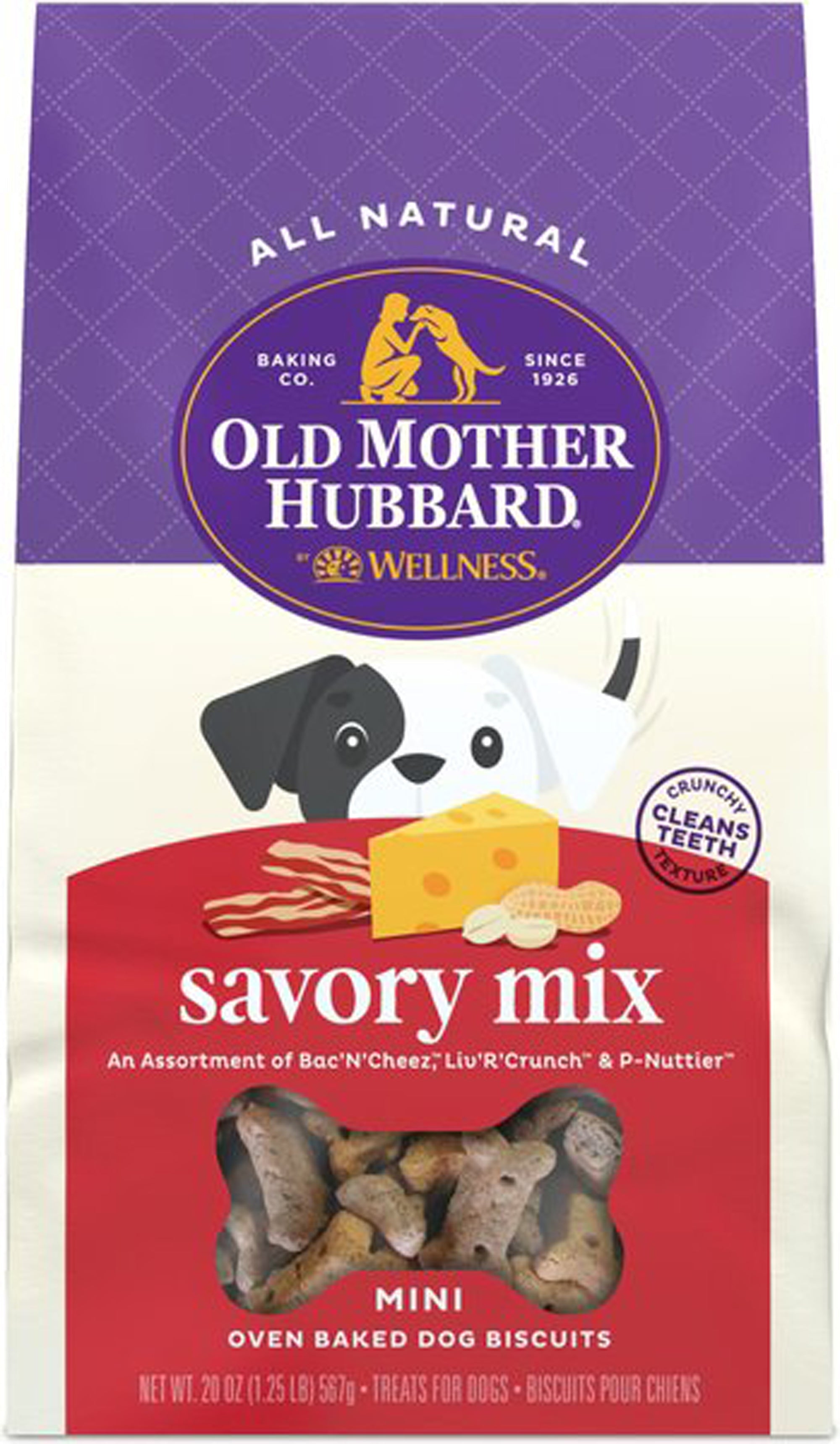
If you want a single flavor for daily use, the Wholesomes Rewards Gourmet Biscuits Nutrnipz Peanut Butter 20 Lb is a large-bag option. For a mix of flavors, the Omh Mini Xtra Tasty Asst 20oz. Crunchy Classic Snacks lets you rotate flavors, priced at $39.99.
Crunchy biscuits can be a reliable part of everyday rewards when you keep portions in check and match the biscuit to your dog.
Frequently Asked Questions
Are crunchy biscuits good everyday treats for dogs?
Crunchy biscuits can be a practical everyday treat when they are made with simple, recognizable ingredients and given in small amounts. Treats are generally recommended to stay at or under 10% of a dog's daily calorie intake, so check each package's feeding guidelines and count biscuits toward your dog's total food. Pick a biscuit your dog can chew comfortably and adjust portions if weight or digestion changes.
How many crunchy dog biscuits can I give my dog each day?
There is no single number that fits every dog, because the right amount depends on body weight, activity level, and the calories in each biscuit. A common guideline is to keep all treats, including crunchy biscuits, to no more than 10% of daily calorie intake. Start by checking the calorie count on the package, estimate your dog's daily needs with your veterinarian, and divide the treat allowance across the day. Many owners find that breaking a biscuit into smaller training pieces stretches the allowance without reducing the reward.
What ingredients should I look for in crunchy dog treats?
Look for a named protein source such as chicken or real cheese, recognizable whole-food ingredients like pumpkin, oatmeal, or sweet potato, and a short ingredient list. Avoid products where vague terms like 'meat by-products' or unnamed fillers make up much of the recipe. Packages describing themselves as no artificial preservatives are a useful starting point, but compare the full list rather than relying on front-label claims. If your dog has known food sensitivities, review the ingredients with your veterinarian before introducing a new biscuit.
Are crunchy dog treats better than soft treats for training?
Crunchy biscuits are often convenient for training because they store well, break into small pieces, and tend to hold their shape in a pocket. Soft treats can be more aromatic and easier to chew for dogs with dental or age-related limitations. The better choice depends on your dog, the length of the training session, and how quickly you need to deliver rewards. Many owners use small crunchy pieces for routine commands and reserve softer, higher-value treats for new or difficult skills.
