

9 Natural Dog Meal Toppers That Tempt Picky Eaters
Last Updated: November 8, 2026
Quick Summary
Dog meal toppers are small, natural additions that add aroma, moisture and texture to plain kibble, encouraging picky eaters to finish their bowls. Choose limited-ingredient options, keep portions small and count their calories against the daily target. Introduce each new topper slowly and consult your veterinarian if problems persist.
- Dogs rely heavily on smell, so a topper's aroma makes plain kibble more appealing.
- Use toppers as a flavor boost, not a replacement for a complete meal.
- Feed a small topper portion, about a teaspoon or two for small dogs and a tablespoon or two for large dogs.
- Introduce one new topper at a time so you can identify any cause of upset.
- Refrigerate cooked protein for three to four days and cooked vegetables for about four to five days.
Table of Contents
- Why Picky Eaters Respond to Meal Toppers
- Types of Natural Toppers: Freeze-Dried, Wet, Broth and Fresh
- Best Dog Food Toppers for Sensitive Stomach Dogs
- Homemade Dog Food Toppers for Picky Eaters: Safe Ingredients and Portions
- Dog Food Toppers for Kibble: Mixing, Calories and Complete Diets
- What Vet Recommended Dog Food Toppers Have in Common
- A Troubleshooting Plan for Picky Eating and Choosing Your Next Topper
- Frequently Asked Questions
Picky eaters are a common frustration for dog owners, and dog meal toppers are one of the simplest ways to address it. A plain bowl of kibble that gets ignored can turn mealtime into a standoff. A small spoonful of the right natural topper often changes the outcome. Here is what to look for before you add a natural topper to a bowl.
Why Picky Eaters Respond to Meal Toppers
Dogs rely heavily on smell, and a topper adds aroma that makes plain kibble more interesting. Moisture and texture matter too. Many picky dogs respond better to food that feels softer or has a bit of crunch than to dry pellets alone.
A topper is not a replacement for a complete meal. Think of it as a flavor boost mixed into a diet that already meets your dog's nutritional needs. Keep the amount small so it encourages eating without displacing the main food.
Types of Natural Toppers: Freeze-Dried, Wet, Broth and Fresh
Each topper type behaves differently in the bowl. Wet toppers add moisture and soften hard kibble. Broth is an easy way to add hydration and aroma without much bulk.
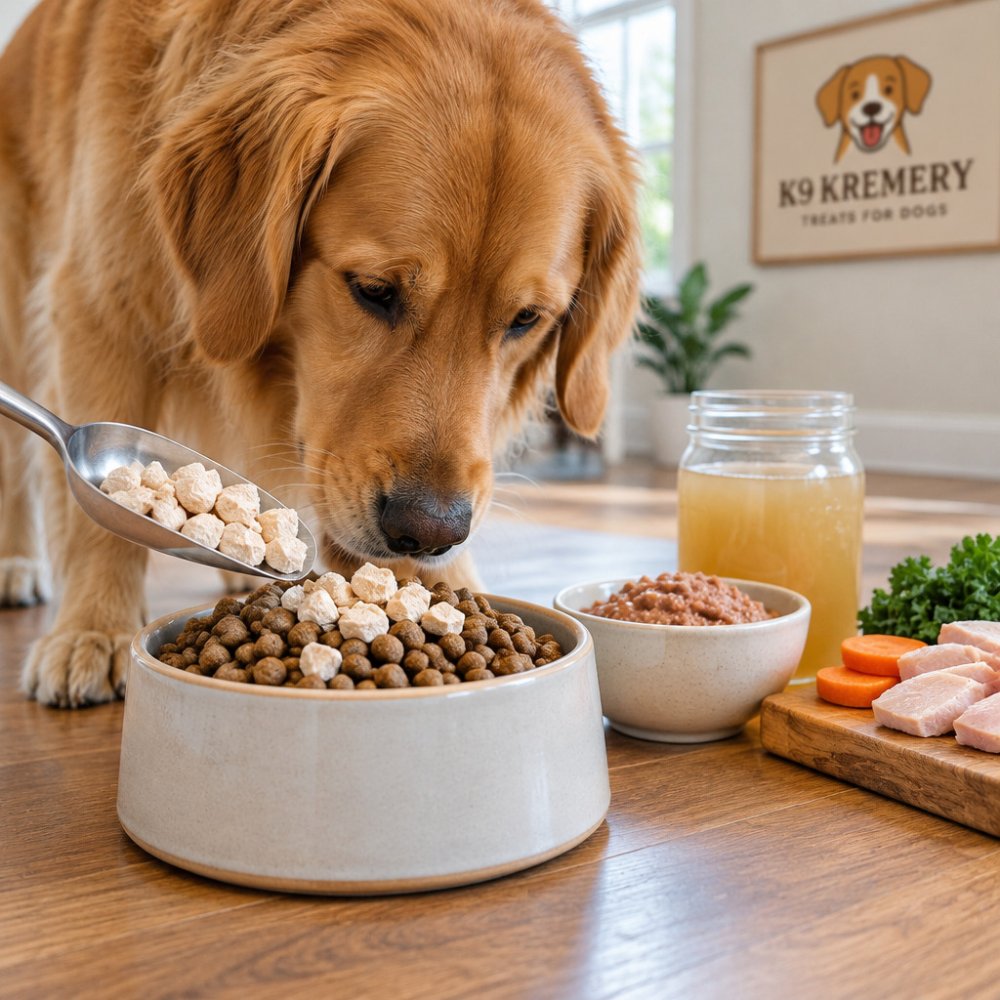
When you shop, read the label. A product labeled natural should list recognizable ingredients in a clear order, with no unexplained additives. You can learn how to read dog treat labels to check whether a topper is genuinely natural before buying.
Best Dog Food Toppers for Sensitive Stomach Dogs
Dogs with sensitive stomachs do best with limited-ingredient toppers. A single animal protein with one or two vegetables is easier to trace if a reaction occurs. Introduce any new topper slowly, one at a time, so you can identify the cause of any upset.
If your dog reacts badly to toppers, a food allergy may be the reason. Check the signs of food allergies in dogs before trying a new option, and speak with your veterinarian if symptoms persist. For dogs that need gentler choices, our sensitive-stomach guide covers suitable options in more detail.
Homemade Dog Food Toppers for Picky Eaters: Safe Ingredients and Portions
Homemade toppers let you control every ingredient, which is their main advantage and their main risk. Plain cooked chicken, scrambled egg, steamed pumpkin, plain sweet potato, and plain cooked white fish are common choices. Avoid onions, garlic, grapes, raisins, xylitol, macadamia nuts, and heavily seasoned foods, all of which can be harmful to dogs. Keep added fats and salt minimal; a topper does not need either to be appealing.
Cook and cool properly. Cook animal proteins to a safe internal temperature, using the same food-safety standards you would apply to your own food, and let them cool to lukewarm before serving. Hot food can scald a dog's mouth and releases more steam than aroma. Do not serve raw poultry or raw eggs to a dog in a household with young children, older adults, or immunocompromised people, because of the cross-contamination risk to the humans handling the food.
Storage durations. Refrigerate fresh homemade toppers promptly and keep them in a sealed container. A common pattern is to use cooked protein within three to four days and cooked vegetables within about four to five days; discard anything that smells off or has been left out. For longer storage, portion into small containers and freeze, then thaw in the refrigerator overnight rather than on the counter. Freeze in single-meal portions so you are not repeatedly thawing and refreezing the same batch.
Serving temperature and handling. Serve fresh toppers at room temperature or slightly warm, not cold from the refrigerator, since cold food mutes aroma and some picky dogs will refuse it. Do not leave a bowl of fresh topper sitting out for more than about an hour, and wash the bowl and any utensils after each meal. If you handle raw ingredients, wash hands and surfaces before and after, and keep raw pet food separate from human food preparation areas.
Portions. Keep portions small, typically a teaspoon or two per meal for a small dog and a tablespoon or two for a large dog, and account for those calories against the daily target as described above. Because nutritional needs vary, check any homemade plan with your veterinarian, especially if the topper becomes a regular part of the diet rather than an occasional enticement.
Watch out: a homemade topper that becomes a large share of the bowl can unbalance the diet even when every individual ingredient is safe, so treat homemade additions as flavor and moisture first and nutrition second.
For a ready-made alternative, see our natural snack options.
The storage and portion guidance for homemade toppers is easier to scan at a glance.
| Item | Guideline | Note |
|---|---|---|
| Cooked protein storage | Three to four days | Refrigerate in a sealed container |
| Cooked vegetable storage | About four to five days | Discard anything that smells off |
| Small dog portion | A teaspoon or two per meal | Count against daily calories |
| Large dog portion | A tablespoon or two per meal | Count against daily calories |
| Serving temperature | Room temperature or slightly warm | Cold food mutes aroma |
| Left-out limit | About one hour | Wash bowl after each meal |
| Frozen thawing | Refrigerator overnight | Avoid counter thawing |
Dog Food Toppers for Kibble: Mixing, Calories and Complete Diets
A topper is an addition, not a replacement. The goal is to keep the base diet complete and balanced while using a small amount of something aromatic and palatable to get your dog eating. The most common mistake is pouring a generous scoop on top and letting the topper quietly displace a meaningful share of the kibble's calories and nutrients.
Do the calorie math first. Find the calorie content on your dog's kibble label, usually listed as metabolizable energy in kilocalories per kilogram (kcal/kg) and often per cup or per can. Your veterinarian can give you a daily calorie target based on weight, age, and activity. From there, decide what share of that target the topper will supply. Keeping toppers to a small share of daily calories leaves the base diet doing the nutritional heavy lifting. If your dog's daily target is 800 kcal, that is about 80 kcal of topper per day, split across meals.
A simple portioning method. Weigh the kibble for the meal, then subtract the topper's calories from the kibble portion rather than adding the topper on top. If the topper is 30 kcal and a cup of kibble is 350 kcal, pull back roughly one-twelfth of a cup of kibble to keep the meal calorie-neutral. Kitchen scales are more accurate than measuring cups for this, especially with freeze-dried crumbles and wet additions that settle unevenly.
Mixing mechanics. Stir the topper through the kibble instead of piling it on top. A dog that eats the topper off the top and leaves the kibble has learned nothing; a dog that gets a bit of flavor in every mouthful is more likely to finish the bowl. For very reluctant eaters, a slight warm-up of wet or fresh toppers can release more aroma, but keep temperatures lukewarm rather than hot.
Keep the diet complete and balanced. If toppers regularly exceed a small share of daily calories, the overall diet can drift out of balance, particularly for puppies and dogs on therapeutic diets. Homemade toppers are the biggest risk here because they are not formulated to be complete.
Watch out: reducing kibble to "make room" for a topper without checking the calorie target can leave a dog genuinely hungry or underfed, so confirm the daily target with your veterinarian before you start trimming portions.
If you want a specific example to compare, the ingredients and feeding notes for a commercial topper show how one product fits into a bowl of kibble.
What Vet Recommended Dog Food Toppers Have in Common
Ask your vet before making a major change, especially if your dog has a health condition, is a puppy or senior, or takes medication. Your vet can advise whether a particular topper suits your dog's needs.
A Troubleshooting Plan for Picky Eating and Choosing Your Next Topper
Start by ruling out medical causes. If your dog suddenly stops eating, contact your veterinarian. For ongoing pickiness, try a structured plan:
- Feed meals at consistent times and remove uneaten food after 15 to 20 minutes.
- Add one topper at a time, in a small amount.
- Watch for changes in appetite, stool or energy over a week.
- Note which textures and flavors your dog prefers.
- Stop any topper that causes vomiting, diarrhea or itching, and consult your vet.
When choosing your next topper, compare ingredient lists, check the calorie impact, confirm storage needs and consider your dog's health history. Shop K9 Kremery's collection online to find natural options that suit your dog's taste.
Frequently Asked Questions
What is the best food topper for a picky dog?
For most picky dogs, freeze-dried meat toppers and warm, low-sodium bone broth are the easiest starting points because they add strong aroma and moisture without changing the base diet dramatically. Broth can work well with dry kibble that feels unappealing. Introduce one topper at a time, in small amounts, and watch whether your dog eats the full bowl. If she still refuses, the issue may be texture or routine rather than flavor, which is worth discussing with your veterinarian.
Are dog food toppers healthy for dogs?
Toppers can be healthy when they are plain, single-ingredient or limited-ingredient, and added in moderation. Whole-food additions such as cooked eggs, plain pumpkin, or lean cooked chicken supply protein and fiber, but they also carry calories. Check the label for added salt, seasonings, onion or garlic, and xylitol, which is toxic to dogs. A topper should complement a complete and balanced diet, not replace it, so count calories and reduce the base food accordingly.
How much food topper should I add to my dog's meal?
As a general rule, toppers should make up only a small share of daily calories, and the right amount depends on your dog's size, activity level and current diet. Start with a teaspoon or two for a small dog and a few tablespoons for a large one, then adjust based on weight and body condition. Because feeding guidelines vary by product, follow the packaging directions and confirm portions with your veterinarian, especially for dogs with health conditions.
Can I use homemade toppers every day?
Daily homemade toppers are common, but they work best when the recipe is simple and balanced over time. Relying on one or two ingredients, such as plain cooked chicken or eggs, can leave gaps in vitamins and minerals, so rotating ingredients or using a complete and balanced supplement guided by your vet helps. Store cooked toppers in the refrigerator for no more than a few days, or freeze them in portions, and discard anything your dog has not eaten after the meal.
