

How to Tell If Dog Treats Are Natural: A Label-Reading Guide
Table of Contents
- What Natural Dog Treats Really Are
- How to Read Dog Treat Labels: A Step-by-Step Walkthrough
- Dog Treat Ingredients to Avoid
- Single-Ingredient Dog Treats: Why They Matter
- Best Dog Treats for Training: Choosing High-Protein Options
- Matching Treats to Your Dog's Size, Age, and Health
- Understanding Food Safety and Sourcing Transparency
- Frequently Asked Questions
Last Updated: October 21, 2026
What Natural Dog Treats Really Are
Understanding how to tell if dog treats are natural requires more than trusting the label, the word "natural" on a dog treat package is not a free pass.

Start with the federal layer. The Food and Drug Administration (FDA) regulates pet food and treats under the Federal Food, Drug, and Cosmetic Act, but has no formal rule defining "natural" for pet food.
Then there is the state layer. Most states adopt model regulations from the Association of American Feed Control Officials (AAFCO), a voluntary organization of state and federal feed regulators.
That definition is dense, but it gives you three practical tests:
- Source: The ingredients should come from plant, animal, or mined sources, not from synthetic chemistry.
- Processing: Physical methods like freezing, drying, rendering, and fermentation are allowed. Synthetic chemical processing is not.
- Additives: Synthetic additives and processing aids are excluded, except for unavoidable traces from good manufacturing practices.
Here is where the label gets slippery. AAFCO's definition applies to the ingredient or feed level, and companies use the term in different ways.
So treat "natural" as a starting claim, not a conclusion.
How to Read Dog Treat Labels: A Step-by-Step Walkthrough
Reading a dog treat label is a skill, and it is easier to learn with a worked example. Below is a walkthrough using a representative ingredient panel, followed by steps you can apply to any package in your hand.
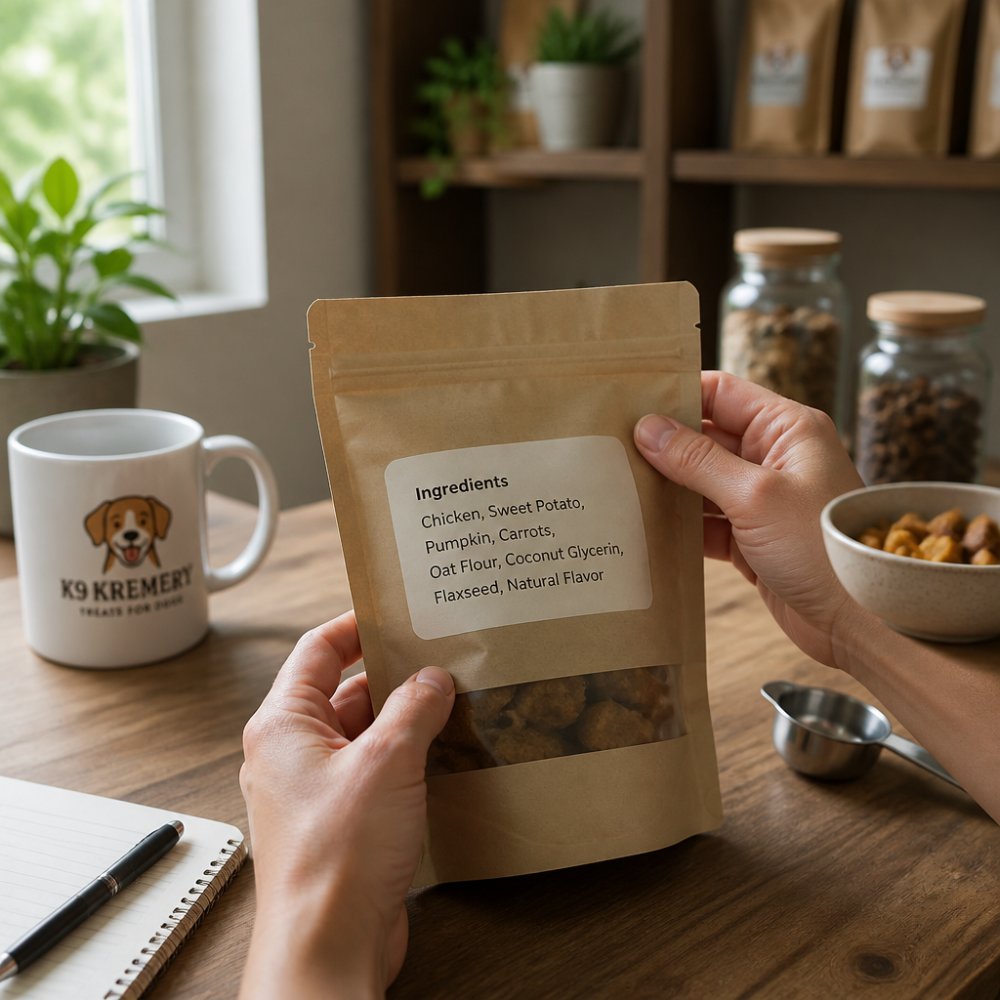
A Worked Example
Imagine a treat bag with this ingredient list:
Chicken, chicken meal, ground corn, animal fat (preserved with BHA), natural flavor, salt, Red 40.
Now walk the panel the way a careful shopper would.
First, the order. Ingredients are listed by weight, from most to least, before processing. "Chicken" is first, which sounds good, but "chicken meal" is second and "ground corn" is third.
Second, the specificity. "Chicken" is a named protein. "Chicken meal" is a rendered, concentrated form made by cooking down chicken parts, less transparent than muscle meat.
Third, the red flags. "Animal fat (preserved with BHA)" tells you a synthetic preservative is present. BHA, or butylated hydroxyanisole, is a synthetic antioxidant used to keep fats from going rancid (the FDA).
Fourth, the verdict. This is not a natural single-ingredient treat. It is a multi-ingredient product with a named protein first, a rendered protein second, a filler third, a generic fat, a synthetic preservative, and an artificial color.
Step 1: Check the Ingredient Order
Ingredients are listed by weight, from most to least. The first should be a specific protein source like chicken, beef, or lamb, not "meat" or "poultry by-products." If the first ingredient is a grain or filler, the treat is not primarily protein-based. Look at the first three together; they make up most of what your dog is eating.
Step 2: Look for Specific Protein Sources
Specific proteins tell you exactly what your dog is eating. Vague descriptions hide what is actually in the treat.
Specific protein sources:
- Chicken breast
- Beef liver
- Lamb
- Turkey
- Fish (salmon, whitefish)
- Beef lung
Vague descriptions to avoid:

- Meat meal
- Poultry by-products
- Animal by-products
- Meat by-products
- Unnamed fish
When you see "chicken breast," you know it is breast meat from chicken. When you see "poultry meal," you are getting an undefined mixture of poultry parts processed at high heat.
Step 3: Scan for Vague Ingredient Descriptions
Vague descriptions are red flags manufacturers use to hide low-quality ingredients while sounding natural.
Common vague terms and what they actually mean:
- "Meat meal" = rendered animal parts of unknown origin
- "Animal fat" = fat from unspecified animals
- "Poultry by-products" = leftover poultry parts (beaks, feathers, organs)
- "Grain by-products" = leftover grain processing waste
- "Natural flavor" = flavoring agents that meet FDA standards but are not necessarily whole food
If an ingredient does not tell you what it is, it is not natural in any meaningful sense. A truly natural dog treat lists every component clearly.
Step 4: Check the Guaranteed Analysis and Calories
The guaranteed analysis gives minimum crude protein and fat and maximum fiber and moisture. It is not a full nutritional profile, but it lets you compare treats: look for high protein and moderate fat. Also look for a calorie statement, often kcal per treat or per kilogram, which lets you portion treats within your dog's daily energy needs instead of guessing.
Step 5: Verify the Claim, Not Just the Word
Learning how to tell if dog treats are natural means verifying claims like "natural," "single-ingredient," or "limited-ingredient" against the ingredient panel. A single-ingredient treat should list one ingredient. A limited-ingredient treat should list a short, named set. If the panel does not match the claim, the claim is marketing.
Dog Treat Ingredients to Avoid
Some ingredients have no place in natural dog treats. Learning to spot them protects your dog's health.
Fillers and Low-Value Ingredients
Fillers bulk up treats without adding nutritional value. They're cheap, which is why manufacturers use them.
Common fillers to avoid:
- Corn
- Wheat
- Soy
- Corn syrup
- Sugar
- Wheat flour
- Cellulose (plant fiber used as filler)
These ingredients don't harm most dogs, but they don't benefit them either. A natural dog treat replaces fillers with protein and whole foods.
Fillers also make treats less satiating. Your dog eats more to feel full, which defeats the purpose of a treat as a controlled reward.
Artificial Additives, Colors, and Flavors
Artificial ingredients have no place in natural dog treats. They serve marketing purposes, not nutrition.
Freeze Dried Lamb Liver Dog Treats & Topper →
Artificial additives to avoid:
- BHA (butylated hydroxyanisole), synthetic preservative
- BHT (butylated hydroxytoluene), synthetic preservative
- Ethoxyquin, synthetic preservative
- Artificial colors (Red 40, Yellow 5, Blue 2)
- Artificial flavors
Dogs can't taste the difference between natural and artificial flavors. These additives appeal to humans, not to improve the treat for your dog.
Synthetic Preservatives
Natural dog treats use natural preservation methods. Synthetic preservatives keep treats shelf-stable but add chemicals your dog doesn't need.
Synthetic preservatives commonly used in treats:
- BHA and BHT (listed above)
- Ethoxyquin
- Potassium sorbate (sometimes listed as "natural" but synthetically produced)
- Sodium benzoate
Natural preservation methods include freeze-drying, which removes moisture so bacteria can't grow. This is why freeze-dried treats stay fresh without synthetic preservatives.
Single-Ingredient Dog Treats: Why They Matter
Single-ingredient treats eliminate guesswork: you know exactly what your dog is eating. A single-ingredient treat contains only one component, beef, chicken, lamb, or another protein, with no fillers, binders, or additives.
Why single-ingredient treats matter:
- Easier to identify if your dog has a food sensitivity
- Highest protein concentration per treat
- Minimal processing required
- Transparent ingredient sourcing
- No hidden additives
K9 Kremery offers several single-ingredient options. The Freeze Dried Lamb Liver Dog Treats contain only lamb liver. The Beef Lung Cubes for Dogs contain only beef lung sourced from the USA. The Chicken Jerky Strips for Dogs contain only dried chicken breast.

When you give your dog a single-ingredient treat, you're not wondering what else is in there. This transparency matters, especially if your dog has a sensitive stomach or allergies.
Best Dog Treats for Training: Choosing High-Protein Options
Training requires treats your dog loves that deliver quick energy. High-protein treats are ideal because they satisfy without filling your dog up. The best training treats are small, soft, and packed with protein, your dog should want to work for them.
High-protein treats work better than low-protein alternatives because:
- Dogs are motivated by protein
- High protein keeps them alert during training
- Smaller portions satisfy your dog
- Your dog stays focused longer
Freeze-dried meat treats are ideal for training. They're lightweight, high-protein, and don't require refrigeration. K9 Kremery's Freeze Dried Chicken Breast treats contain 73% minimum crude protein, making them excellent for training sessions.
Size matters in training treats. Break larger treats into smaller pieces so your dog gets rewarded frequently without overfeeding. Chicken jerky strips snap easily into smaller pieces, perfect for extended training sessions.
Matching Treats to Your Dog's Size, Age, and Health
Not every treat suits every dog; size, age, and health status determine which are appropriate.
Small dogs need smaller treats or treats that break easily. Large chunks pose choking risks. Freeze-dried treats can be crumbled or broken into appropriate sizes.
Senior dogs may have dental issues. Softer treats or freeze-dried options that dissolve easily are better than hard, crunchy treats.
Puppies shouldn't have hard treats that could damage developing teeth. Soft, easily chewed options are safer. Avoid treats with excessive calories, puppies need controlled nutrition.
Dogs with sensitive stomachs benefit from single-ingredient treats. The fewer ingredients, the lower the risk of triggering a reaction.
Overweight dogs need portion control. Treats should make up no more than 10% of daily calorie intake. High-protein, low-calorie options like freeze-dried meat are ideal.
Understanding Food Safety and Sourcing Transparency
Natural dog treats should come from manufacturers who prioritize food safety and can trace their ingredients.
Ask these questions about any treat you consider:
- Where do the ingredients come from?
- How is the treat processed?
- What quality control measures are in place?
- Can the manufacturer provide sourcing documentation?
Transparency matters. A brand that clearly states "USA-sourced beef" is more trustworthy than one that simply says "beef." Knowing where ingredients come from helps you assess food safety.
Freeze-drying is one of the safest processing methods for dog treats. It removes moisture without high heat, preserving nutrients while preventing bacterial growth. No synthetic preservatives needed.
K9 Kremery sources freeze-dried proteins from USA suppliers and clearly lists sourcing on product labels. This transparency lets you make informed choices about what you're feeding your dog.
Manufacturing standards vary widely. Treats produced in facilities with rigorous quality control are safer than those from unregulated sources, so look for brands that explain their manufacturing processes.
Choosing natural dog treats comes down to reading labels carefully and understanding what each ingredient actually is. Start with single-ingredient options from K9 Kremery, our Freeze Dried Chicken Breast, Freeze Dried Lamb Liver, Beef Lung Cubes, and Chicken Jerky Strips all meet the standard for truly natural treats.
Frequently Asked Questions
Does the word 'natural' on a dog treat label guarantee it is healthy?
No. The FDA does not have a strict definition for 'natural' on pet food labels, so manufacturers can use the term loosely. A treat labeled 'natural' may still contain fillers, by-products, or synthetic preservatives. Always read the full ingredient list to verify what's actually in the treat, regardless of marketing claims on the front of the package.
What should I avoid when buying dog treats?
Avoid treats with vague ingredient descriptions like 'meat by-products' or 'animal fat,' artificial colors and flavors, synthetic preservatives like BHA or BHT, and excessive fillers such as corn and soy. Instead, look for named protein sources like chicken, beef, or lamb, and treats with minimal processing. Single-ingredient options eliminate guesswork entirely.
Are single-ingredient dog treats better than treats with several ingredients?
Single-ingredient dog treats eliminate confusion about what your dog is eating and reduce the risk of unwanted additives. They're ideal for dogs with sensitivities or allergies. However, multi-ingredient treats can be nutritionally balanced if each ingredient is recognizable and high-quality. The key is reading the label carefully regardless of ingredient count.
How can I check whether a natural dog treat is safe for my dog?
Start by reviewing the ingredient list for anything your dog is allergic to or sensitive to. Check the calorie content and follow portion guidelines, especially for training treats. If your dog has health conditions, consult your veterinarian before introducing new treats. Watch your dog for any digestive upset or allergic reactions after eating a new treat, and discontinue if problems occur.