

How Many Treats Can a Dog Have Per Day?
Quick Summary
A dog's treats should not exceed 10% of its daily calories, according to the UC Davis School of Veterinary Medicine. So the answer to how many treats can a dog have per day depends on the calorie count of each treat, not a fixed number of pieces.
- Treats, table scraps, and extra food all count toward the 10% limit.
- Multiply your dog's daily calories by 0.10 to get the treat calorie budget.
- Check the calorie statement on the label and confirm whether it is per piece.
- Subtract treat calories from the regular meal to keep total intake on plan.
- Puppies, seniors, and dogs with medical conditions should get a vet-approved limit.
Table of Contents
- Last Updated: November 8, 2026
- The 10% Rule for Dog Treats: What the Guidelines Say
- How to Calculate Dog Treat Portions by Calories
- How Many Training Treats Per Day Is Reasonable
- Choosing Low-Calorie Dog Treats for Everyday Rewards
- Adjusting Meals When Treats Are Part of the Plan
- Treat Limits for Puppies, Seniors, and Dogs With Health Needs
- Planning Your Dog's Treat Allowance Starting Today
- Frequently Asked Questions
Last Updated: November 8, 2026
Last Updated: November 8, 2026
The 10% Rule for Dog Treats: What the Guidelines Say
Most dogs can have treats, but only in limited amounts. According to the UC Davis School of Veterinary Medicine treats guidelines for dogs, treats and other extra food should not exceed 10% of daily calories.
The 10% rule is a calorie rule, not a count rule. A dog that eats 100 calories a day should get no more than 10 calories from treats. That means the number of treats depends on how big each one is.
The World Small Animal Veterinary Association makes the same point in its treat guidance, noting that treats should make up no more than 10% of a dog's daily calorie intake. The WSAVA guide to feeding treats to your dog also recommends a table of maximum treat amounts, though the exact table values were not available for this article.
Treat calories add up fast. A review of dog treats published in Frontiers in Animal Science found that one bully stick piece a day can supply about 9% of a 23-kilogram medium-sized dog's daily calorie needs. That is nearly the whole treat allowance from a single chew.
- Treats, table scraps, and extra food all count toward the 10%.
- Calorie count matters more than the number of treats.
- Large chews can use up the whole allowance quickly.
Maximum treat share of daily calories
Source: UC Davis School of Veterinary Medicine, “Treats guidelines for dogs”
How to Calculate Dog Treat Portions by Calories
Start with your dog's daily calorie needs. Your veterinarian can give you a number, or you can estimate from the calorie statement on your dog's food and the amount you feed. Then take 10% of that number. That is your daily treat budget in calories, not in pieces.
The formula is simple: daily calories × 0.10 = treat calories per day. Everything else, biscuits, chews, training bites, table scraps, comes out of that budget.
Worked Examples by Dog Weight
These examples use typical resting calorie estimates for healthy adult dogs. Your dog's actual needs can be higher or lower based on activity, age, and health, so treat them as starting points.
- Small dog, about 10 lb, roughly 200-300 calories a day: treat budget of 20-30 calories. That is about 6-10 three-calorie training bites, or one small biscuit plus a few pea-sized rewards.
- Medium dog, about 30 lb, roughly 500-700 calories a day: treat budget of 50-70 calories. That may be a few dozen small training pieces, or two to three larger biscuits, but not both on the same day.
- Large dog, about 70 lb, roughly 900-1,200 calories a day: treat budget of 90-120 calories. That leaves room for several larger rewards or one moderate chew, but a single high-calorie chew can still use most of it.
A common pattern is that owners underestimate small dogs and overestimate large dogs. A 10 lb dog getting 10 three-calorie training treats has already used 30 calories, possibly the whole daily allowance.
Reading Calorie Information on Treat Labels
Look for the calorie statement on the package. Our label-reading guide to telling whether dog treats are natural explains how to judge whether the ingredients are truly natural. In the U.S., pet treat labels typically list calories per treat, per piece, or per serving, and some list calories per kilogram or per cup. If the label gives calories per kilogram, divide by 2.2 to get calories per pound, then weigh or estimate the piece. If it gives calories per cup, measure how many pieces fit in a cup and divide.
Watch out: calorie statements can be listed "as fed" or "per treat," and a serving may be more than one piece, always confirm whether the number is per piece before you count treats.
If the label is unclear, check the brand's website or contact the company.
Turning Calories Into a Daily Treat Count
Once you know calories per treat, divide your treat budget by that number. A 40-calorie budget with 3-calorie treats allows about 13 treats; the same budget with 40-calorie biscuits allows one. That is why the answer to "how many treats can a dog have per day" is always a range, not a fixed number.
- Weigh or count a typical treat once, then write the calorie value on the bag.
- Keep a simple daily tally, especially during training weeks.
- Recheck the math when you switch brands or treat sizes.
How Many Training Treats Per Day Is Reasonable
Training sessions add up fast. Ten rewards in a short session can use up a small dog's whole treat budget.
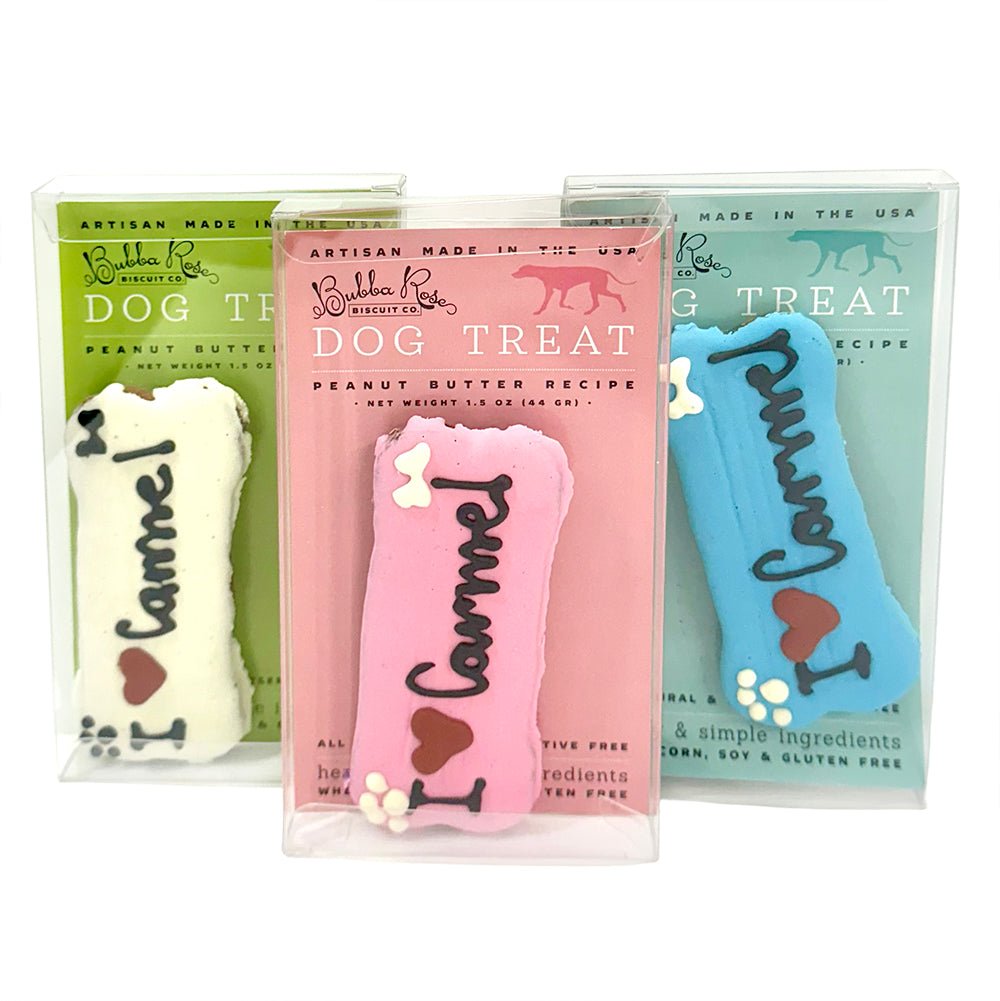
Use smaller treats for training. The
- Break treats into pea-sized pieces.
- Use a portion of the dog's regular meal as training rewards.
- Keep sessions short and frequent rather than long and heavy on treats.
Bocces Bakery Dog Training Say Moooo is a soft, chewy option made as perfectly sized training bites, and Bocces Dog Crispies are light, snack-sized treats listed at 3 calories per treat. Both are available in our shop the training treats collection.
Choosing Low-Calorie Dog Treats for Everyday Rewards
Low-calorie treats let you reward more often without overshooting the daily limit. Look for small pieces and clear calorie counts on the label.
The Bocces Dog Crispies Peanut Butter and Blueberry 10 oz are listed at 3 calories per treat, $7.99, and made without wheat. The Bocces Dog Crispies Bacon and Banana 10 oz are also listed at 3 calories per treat, $7.99.
If you want a crunchy biscuit for daily rewards, the Bocces Bakery Everyday Bacn Nutty Biscuits crunchy dog treats are a good place to start. For more on picking microwaveable options, see how to choose microwaveable treats for dogs.

The article lists the calorie count per treat for two Bocces Dog Crispies flavours, which makes them easy to compare.
| Product | Calories per treat | Price |
|---|---|---|
| Bocces Dog Crispies Peanut Butter and Blueberry 10 oz | 3 | $7.99 |
| Bocces Dog Crispies Bacon and Banana 10 oz | 3 | $7.99 |
Adjusting Meals When Treats Are Part of the Plan
Treats count toward the day's total, so meals may need to shrink a little. If your dog gets 40 calories of treats, cut 40 calories from the regular meal.
This matters most for dogs trying to lose weight or hold a healthy weight. Measure the meal, then subtract the treat calories before you feed.
Treat Limits for Puppies, Seniors, and Dogs With Health Needs
Puppies, older dogs, and dogs with medical conditions often need a different plan. Their calorie needs and diet rules can differ from an adult dog's, so ask your vet before setting a treat limit. The 10% rule is a starting point, not a prescription for every dog.
Puppies
Puppies are growing, so their calorie needs per pound are higher than an adult dog's, and their stomachs are small. A common pattern is to use very small training treats, pea-sized or smaller, and to count them against the puppy's daily food ration rather than adding them on top. Large chews are a choking hazard for young dogs; choose treats sized for the puppy's mouth and supervise chewing.
Seniors
Older dogs often need fewer calories and may have dental disease, kidney issues, or other conditions that affect what they can eat. A senior dog's treat budget may be smaller than the 10% math suggests, and soft treats may be easier to chew. Ask your vet whether the dog's diet is complete and balanced before adding treats.
Overweight Dogs
For a dog trying to lose weight, treats are often the easiest place to cut calories. A practical approach is to set the treat budget from the target weight's calorie needs, not the current weight, and to use a portion of the measured meal as training rewards. A common pattern is to reduce the meal by the treat calories so total intake stays on plan.
Dogs With Medical Conditions
Dogs with diabetes, pancreatitis, kidney disease, food allergies, or other conditions may need treats cleared by a veterinarian. Some prescription diets restrict treats entirely, and some conditions make high-fat or high-sugar treats risky. Do not change a therapeutic diet or add treats without veterinary guidance.
Treat Safety Checklist
Calorie guidance does not address whether a treat is safe. Before you hand over any treat, check:
- Choking and size: match the treat to the dog's size; avoid whole bones, hard chews that can splinter, and small pieces that can be swallowed whole.
- Toxic ingredients: chocolate, xylitol, grapes and raisins, onions and garlic, and alcohol are unsafe for dogs. Check ingredient lists on packaged treats.
- Food sensitivities: introduce new proteins or ingredients one at a time and watch for itching, vomiting, or diarrhea.
- Supervision: watch your dog during chews, and remove any piece that breaks into sharp or swallow-sized fragments.
Watch out: "natural" or "limited ingredient" on a label does not mean low-calorie or safe for every dog, always check the calorie statement and the full ingredient list.
For puppies, see our guide to seasonal dog treats puppies can enjoy safely for ideas that suit young dogs.
Planning Your Dog's Treat Allowance Starting Today
Start by finding your dog's daily calorie needs. Take 10% of that number, and that is your treat budget for the day.
Then check your treat labels, count the calories per piece, and track them for a week. Adjust the meal size if you go over.
K9 Kremery offers training-friendly treats and a range of natural dog treats. Browse our collection and find the right treat for your dog's daily allowance.
Frequently Asked Questions
How many treats can a dog have per day?
Most veterinary guidance, including the UC Davis School of Veterinary Medicine treat guidelines, says treats and extra food items together should stay under 10% of a dog's daily calories. The rest should come from complete and balanced nutrition. For a dog that eats 1,000 calories a day, that means no more than 100 calories from treats. Because treat sizes vary widely, count calories rather than the number of pieces, and check the label or the manufacturer's calorie information for each product you use.
Do training treats count toward a dog's daily food intake?
Yes. Training treats count toward the daily calorie allowance, and so do table scraps and other extras. Frequent small rewards add up quickly during a training session, so many owners reduce the dog's regular meal by the calories given as rewards. K9 Kremery's Bocces Dog Crispies are listed at 3 calories per treat.
Can too many treats make a dog sick?
Yes. Overfeeding treats is a common cause of weight gain in dogs, and extra body weight raises the risk of joint strain and other health problems over time. Treats can also cause digestive upset when they are rich, fatty, or a sudden change from the usual diet. Watch your dog's body condition, adjust meals when treats increase, and speak with your veterinarian if weight or digestion changes.
What are healthy low-calorie treats for dogs?
Look for small, lightweight treats with a clearly listed calorie count per piece, so you can fit them into the daily allowance. Products such as K9 Kremery's Bocces Dog Crispies Peanut Butter and Blueberry 10 oz, priced at $7.99, are designed as snack-sized treats at 3 calories each. Bocces Bakery Dog Training Say Moooo 6 oz, priced at $5.99, is a soft, chewy training treat.
